MAILCHIMP VS. MAILERLITE
Why choose Mailchimp over MailerLite?
Get advanced email marketing with support when you need it. Compare Mailchimp vs. MailerLite for powerful automation, analytics, and tools that scale—without the limitations of simpler platforms.
-
#1
Mailchimp is the #1 AI-powered email marketing and automations platform
-
9x revenue
Generate up to 9x revenue* using marketing automation flows
-
27x ROI
Mailchimp e-commerce users on the Standard plan saw up to 27x ROI.
-
>99% delivery
rate for transactional and marketing emails
-
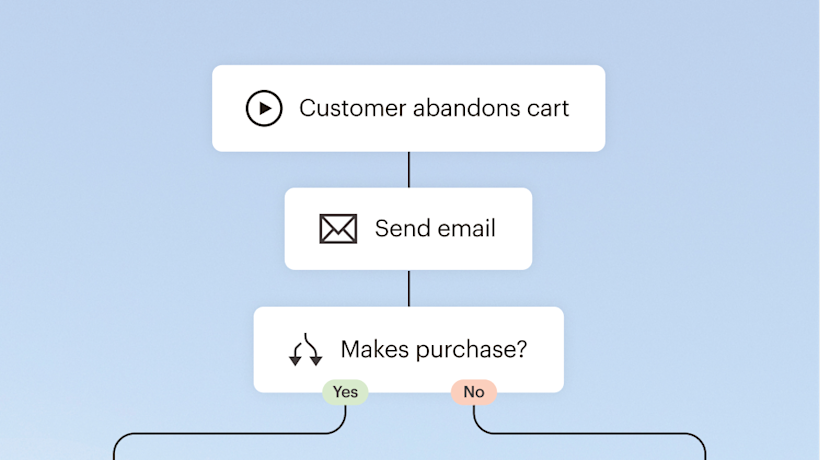
Convert customers
Craft emails, use behavioral data to more precisely target audiences, and optimize your strategy.
-

See more and scale faster
With all of your data in one place, Mailchimp gives you what you need to make the right call at the right time.
-
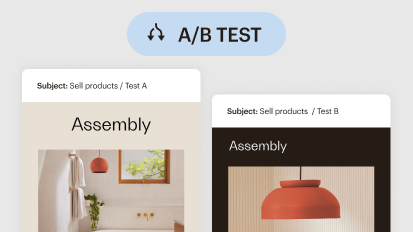
Optimize and iterate constantly
Use A/B testing and send time optimization to improve your strategy and identify the right times to reach out.
Mailchimp users saw up to a 97% higher click rate when they used both email and SMS.*
How do MailerLite and Mailchimp compare?
-
✅ Mailchimp is the #1 email marketing and automation platform.*
-
❌ With 1M+ users, MailerLite targets creators and businesses.
-
✅ Designed to grow with teams, Mailchimp meets the needs of small and large businesses.
-
❌ Limits teams to just 3 user seats on the Growing Business plan, requiring an upgrade for unlimited access.
-
✅ Mailchimp offers 24/7 email/chat support, and 24/7 phone support to Premium plans.*
-
❌ MailerLite offers email and chat support on paid plans, but no troubleshooting urgent issues.*
-
✅ Advanced analytics and reporting, including attribution and benchmarking.
-
❌ MailerLite offers standard campaign metrics but lacks industry benchmarking.
-
✅ Marketing automation flows with 100+ customizable templates to choose from.
-
❌Offers basic automation capabilities but caps flows at 100 steps.
-
✅ Mailchimp offers 330+ pre-built integrations across ecommerce, CRM, analytics, and productivity tools.
-
❌Integrates with over 100+ apps, limiting connectivity for complex marketing stacks.










Mailchimp’s powerful SMS marketing platform delivers results:
97% higher click-rates for businesses using both email & SMS
20x more ROI for Mailchimp e-commerce users after launching their first SMS campaigns.

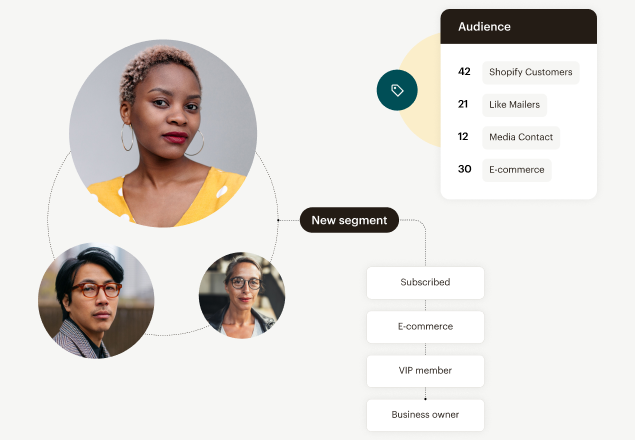
Drive revenue with powerful audience segmentation tools
Marketers gain 2x more revenue using AI-powered segments, an advanced feature in Mailchimp’s platform.*
Change should make life easier, not harder
Use the onboarding support and migration tools designed specifically to import your contacts and brand assets.


Do more with Mailchimp’s 300+ app integrations
Mailchimp’s open API makes it easy to consolidate data across platforms—so you can keep using the tools you love.

11M+ users use Mailchimp
But don’t just listen to our large, loyal customer base—Mailchimp is also recognized as an industry leader for businesses of many sizes.
Source: G2.com, Inc
Switching to Mailchimp is easy
Ready to make the jump? Let us help with personalized onboarding through your first 90 days and award-winning customer support.
-
The biggest difference between Mailchimp vs MailerLite comes down to capabilities and scale. Mailchimp is built to support businesses of all sizes with advanced automation, detailed analytics, and extensive integrations. MailerLite works well for basic email campaigns but doesn’t offer the same depth of features or support options. If you need tools that can grow with your business and handle complex marketing strategies, Mailchimp provides more flexibility and power. For example, Mailchimp offers hundreds of customizable templates and lets you build workflows with up to 200 steps.* You can send triggered emails based on customer behavior, purchase history, website activity, and dozens of other data points. MailerLite offers automation, but the capabilities are more limited, especially when you’re trying to build sophisticated customer journeys. Another major difference is in analytics and reporting. Mailchimp gives you revenue attributions so you can see exactly which campaigns drive sales, not just opens and clicks. You also get access to predictive analytics that help you identify customers who are likely to buy again or churn. MailerLite provides standard email metrics, but it doesn’t have the same level of insight into how your campaigns impact your bottom line.
-
Comparing MailerLite vs Mailchimp, Mailchimp is the better choice for teams. It offers collaboration features, user permissions, and 24/7 support through email, chat, and phone for Premium plans. Teams can work together on campaigns, access detailed performance data, and get help when they need it. MailerLite has email and chat support on paid plans, but no phone support option, which can slow down your team when urgent issues come up. When you’re working under tight deadlines or dealing with a technical problem that’s blocking a campaign launch, being able to call someone directly makes a real difference.
-
When choosing between Mailchimp or MailerLite, pricing is always going to be a factor. MailerLite’s pricing is lower upfront — the free plan covers 500 subscribers compared to Mailchimp’s 250 contacts, and their paid plans start at $9/month. Mailchimp’s plans start at $13/month for the Essentials plan and $20/month for the Standard plan. The difference is what you get for that price. Mailchimp includes advanced automation, revenue attribution, predictive analytics, SMS marketing, 300+ integrations, and 24/7 support. MailerLite covers basic email needs but lacks many of the tools that help you optimize campaigns and drive better results. If you’re focused purely on cost, MailerLite is cheaper. However, if you want a plan that delivers more value and grows with your business, Mailchimp makes more sense.
-
Mailchimp includes advanced automation workflows, AI-powered content generation, detailed revenue attribution, SMS marketing, landing pages, and hundreds of integrations. You also get access to customer journey builders, predictive analytics, and multivariate testing. MailerLite covers the basics, including email campaigns, simple automation, and landing pages. However, it lacks many of the advanced features that help you optimize campaigns and drive more revenue. The difference will become clear when you need to do more than send basic newsletters. For instance, Mailchimp’s AI features help you generate subject lines, write email content, and optimize send times based on when your audience is most likely to engage. The platform also includes predictive segments that identify which customers are most likely to buy or which ones might be at risk of churning. Integration is another area where Mailchimp pulls ahead. You can connect your email marketing to e-commerce platforms, QuickBooks, Salesforce, and 300+ other tools. This means your customer data, purchase history, and email marketing all work together. If someone buys a product from your online store, that information flows into Mailchimp automatically, and you can trigger follow-up emails based on what they purchased. MailerLite has integrations, too, but the selection is much smaller, and some connections may require workarounds or third-party tools to make them function properly.
-
Choose Mailchimp if you want a platform that grows with your business. You’ll get access to advanced automation, better analytics, comprehensive integrations, and support when you need it. Mailchimp handles complex marketing strategies and gives you the tools to make data-driven decisions. MailerLite works for straightforward email campaigns, but if you’re serious about email marketing and want to get better results over time, Mailchimp offers significantly more value. Plus, with 11+M users and proven results, you’re choosing a platform that businesses rely on to drive revenue.
Disclaimers
- #1 AI-powered email marketing platform: Based on May 2025 publicly available data on number of customers of competitors that also advertise using AI to enhance their email marketing and automation products and services.
- 9x more revenue: Based on total revenue generated from bulk emails by users’ of Marketing Automation Flows from January 2023 - January 2025. Customer Journey Builder (CJB) was rebranded to Marketing Automation Flows (MAF) effective as of June 2025. Any references to “Automation Flows” refers to the same features previously available under CJB. Features and functionality vary by plan type. For details, view Mailchimp’s various plans and pricing.
- 1 Billion Emails Sent: Based on InLine AI Assistant feature for December 2023 - August 2024. Standard and Premium plans only.
- >99% Delivery Rate for Transactional and Marketing Emails: Data reflects the delivery rate for transactional and marketing emails from January 1, 2024, to December 31, 2024 and is the aggregate of all Mailchimp users across all plans.
- 97% Higher Click Rate: Based on US users who sent both email and SMS campaigns compared to users who sent only email campaigns from 8/1/23 to 1/05/25.
- 20x SMS ROI: Based on U.S. SMS users’ e-commerce revenue attributable to first SMS campaign launch during September 2023 through April 2024. ROI calculation requires an e-commerce store that is connected to a Mailchimp account. Results may vary.
- G2: Based on G2’s Summer 2025 Grid Report for Automation rankings as of August 26, 2025. Feature ratings are representative of reviewers' overall satisfaction with each feature and do not necessarily take into account the breadth of individual product features. G2 does not add any subjective input to the ratings, which are determined algorithmically based on data aggregated from publicly available online sources and social networks. See G2 Report.
- MailerLite Pricing and Plan Information: Based on publicly available pricing information from MailerLite as of December 2025. See https://www.mailerlite.com/pricing.
- Workflows with up to 200 steps: Based on Mailchimp’s Customer Journey Builder capabilities. Feature availability varies by plan type. See https://mailchimp.com/help/about-customer-journeys/.
- Mailchimp pricing: Based on current pricing and plan details as of December 2025. See https://mailchimp.com/pricing/marketing.