Mailchimp Transactional or Postmark: Which is Right for You?
Learn why developers and marketers prefer Mailchimp Transactional over Postmark for high-speed transactional notification delivery.
-
300 billion+
sent with Mailchimp Transactional Email since 2018
-
99.99% uptime
with Mailchimp Transactional Email*
-
<1 second delivery
with Mailchimp’s median transactional email speed
-
>99% email delivery rate
Average for Mailchimp emails
-
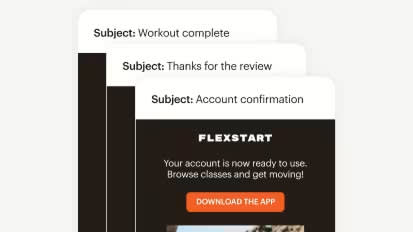
Maintain brand consistency
Gain control over transactional templates and rely less on developers by editing them right in Mailchimp.
-

Easy configuration
REST API is easily configured to your code base, so you can get set up and make changes quickly.
-

Reliable infrastructure
Send up to 157 billion emails/month on a scalable platform that fits startups and enterprises Alike.
See how Postmark and Mailchimp compare
-
Mailchimp
✅ Mailchimp is a unified multi-channel platform for all of your marketing and transactional needs.
-
Postmark
❌ Postmark offers transactional and marketing services, but workflow between the two can feel disconnected.
-
✅ Purchased in blocks of 25,000, cost of each block decreases as volume grows. Blocks allow for forecastable spend.
-
❌ Postmark’s volume-based pricing can get expensive as you grow, and lower-tier plans come with limitations.
-
✅ Dedicated support team with delivery expertise to keep you moving at speed.
-
❌ Postmark offers email-based support during business hours.
-
✅ Mailchimp’s unified platform makes it easier for marketers to edit transactional templates without relying on engineers.
-
❌ Postmark remains more oriented towards developers than marketers, making it harder to update templates.
-
✅ Priced in blocks of 25,000 emails. Mailchimp Transactional requires a paid Mailchimp plan. No overage fees, when blocks run out sending stops.
-
❌ Postmark includes overage fees that can make costs harder to predict as sending scales up.
Fast, dependable transactional SMS messages
With Mailchimp’s updated transactional API, businesses can send critical 1:1 text messages via SMS as well as email.


Do more with Mailchimp’s 300+ app integrations
Mailchimp’s open API makes it easy to consolidate data across platforms—so you can keep using the tools you love.
Switching to Mailchimp is easy
Ready to make the jump? Let us help with personalized onboarding through your first 90 days and award-winning customer support.
FAQs
-
Mailchimp Transactional is built for speed, with a median delivery time of less than one second to customers’ inboxes and 99.99% uptime. That means password resets, order confirmations, and account alerts reach people when they need them.
Postmark also delivers transactional notifications quickly, but the difference is ease of use. Mailchimp’s unified marketing and transactional platform makes it easier for marketers to update transactional templates, limiting the need for engineering involvement. Postmark offers some collaborative tools for marketers and engineers, but the platform remains more developer focused and it’s harder for marketers to update templates without help.
-
The two platforms use different pricing models, and the difference is most noticeable at scale. Postmark charges a monthly plan fee plus a per-1,000 overage rate for any emails beyond your included amount, so costs can climb quickly during high-volume months.
Mailchimp Transactional uses block pricing, where one block equals 25,000 emails, and the per-block cost drops as you buy more. You can also set auto-purchase alerts, and sends are calculated in real time, which gives you more control over spend.
For businesses sending at meaningful volumes, Mailchimp’s block model tends to be more cost-efficient without compromising on deliverability.
-
Yes. Mailchimp Transactional lets you send sms and emails, so you can send OTPs, shipping alerts, appointment reminders, and account verification through a single API integration.
Postmark also offers transactional email and SMS, but SMS is offered via ‘message streams’ which can make the workflow feel split. Postmark also lacks Mailchimp’s ease of use. Mailchimp’s unified marketing and transactional platform makes it easier for marketers to update transactional templates, while Postmark remains more developer focused.
-
Mailchimp takes a deliberate approach to protecting transactional deliverability. Here’s how it works:
- Bulk sending restrictions: Mailchimp intentionally limits bulk-style sending through Transactional to protect IP reputation. This guardrail helps support higher deliverability and stronger inbox placement for trigger-based messages.
- Separate sending infrastructure: Transactional and marketing emails are routed through distinct systems, so promotional campaigns won't interfere with the delivery of critical notifications.
- Authentication support: Built-in tools for SPF, DKIM, and DMARC help verify your sending identity and reduce the risk of spoofing.
- Dedicated IPs: Available at $29.95/month for senders who want full control over their sending reputation and brand isolation.
-
Mailchimp is designed to support collaboration between marketers and developers on transactional templates. Developers control the integration via API, but when non-technical team members need to update copy, branding, or legal language, they can do it through Mailchimp’s template builder without submitting an engineering ticket.
Postmark’s template management is more developer-focused, so changes typically run through API workflows or a basic editor, which can create bottlenecks when templates need frequent updates.
*Disclaimers
99.99% Uptime: Uptime past performance is not a guarantee of future performance and may be affected by factors outside of our control.