AI Marketing Tools
Know what’s driving your revenue. And what to do next.
Mailchimp with Intuit Intelligence turns your store data into clear answers and AI recommends the next move—so you spend more time selling, less time guessing.
Terms apply (link: https://mailchimp.com/legal/terms/). No credit card required. Features vary by plan.
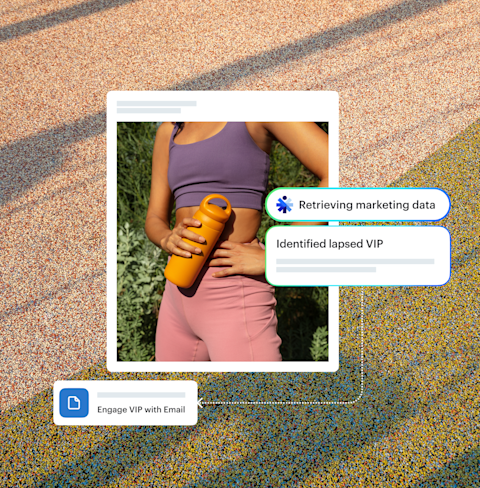
Mailchimp customers saw:
-
Up to 30x
ROI when they connect their ecommerce store to Mailchimp[1]
-
Up to 1.7x
more attributed revenue with Abandoned Cart Automation Flows vs. bulk emails[2]
-
Up to 2x
higher click rates when they used both Email and SMS[3]
Recommendations built on what you’ve sent, sold, and who bought it
No generic playbook here—every recommendation is grounded in your store’s real sales, campaigns, and customer behavior. The more you use Mailchimp, the sharper it gets.
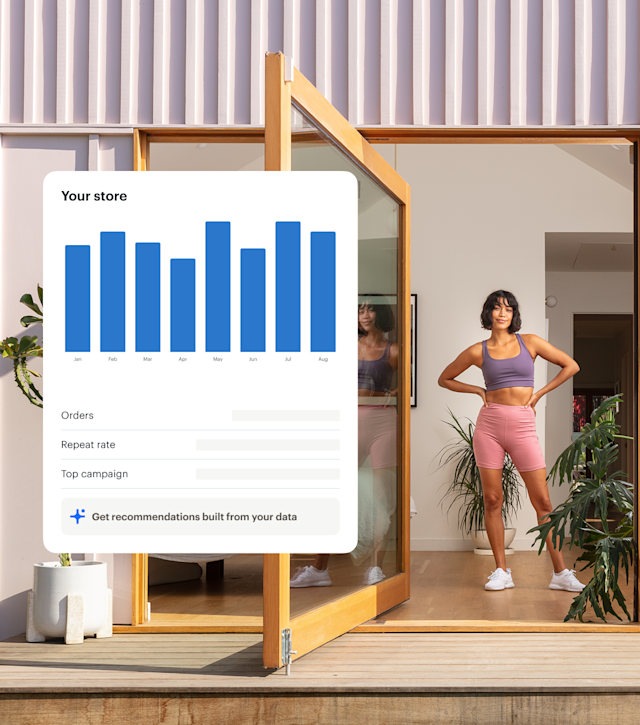

Understand what’s driving revenue. Do more of it.
Analytics AI, part of Mailchimp with Intuit Intelligence, explains which campaigns and automations are actually moving revenue—and the plain-language reason why—so you can double down on what works.
"It's like getting to hire a marketing specialist for free."
Create campaigns with the AI you already use. Without leaving the chat.
Mailchimp connects to ChatGPT, Claude, Perplexity, Codex, and Google Workspace, so you can build email and SMS campaigns with the assistant you already trust—grounded in your real store data instead of a generic guess.

Coming soon
From insight to done, in one place
Soon Mailchimp won’t just surface the next move, it’ll help you make it—turning an opportunity in your data into a ready-to-review campaign, a built segment, and more, without switching tools.
FAQs
-
Mailchimp offers several AI marketing tools powered by Intuit Assist that make creating and managing campaigns easier. The inline text generation feature helps you write email copy faster when you're stuck or short on time.
Beyond creation, you'll get recommendations for send times, content improvements, and pre-send tips that can boost performance, plus pre-built marketing flows that let you personalize messages beyond just using someone's first name.
-
Mailchimp's AI features focus on getting more people to open and click your emails. The send time and send day optimization tools analyze when your specific audience is most likely to engage, then recommend the best times to hit send.
For deeper personalization, predicted attributes and pre-built marketing flows help you send more relevant content to each subscriber. This kind of AI customer segmentation typically leads to better engagement rates because people are seeing content that actually matters to them.
-
Yes. Mailchimp has built-in AI content writing tools that speed up the creation process. The "Write with AI" feature works directly in your email editor, whether you're using the new or classic version. You can use it to generate copy, rewrite sections, or polish your messaging without leaving the platform.
-
Mailchimp's AI analytics examine when your subscribers are most likely to engage with emails. Send time optimization looks at historical click rate trends and predicts the best times to send based on patterns from the past year. Meanwhile, send day optimization considers your industry to recommend which day of the week will get you the best results.
These recommendations are based on actual engagement data from your audience and similar businesses, taking the guesswork out of scheduling.
-
Small businesses often don't have big marketing teams or unlimited time, which is exactly where AI marketing automation comes in handy. Mailchimp's AI tools let you create professional content quickly, even if you're not a writer or designer. The optimization features also help you compete with bigger companies by giving you data-driven recommendations for send times and personalization strategies.
Basically, AI as a service levels the playing field by giving small businesses access to sophisticated marketing capabilities that would otherwise be out of reach.
-
Mailchimp's pre-built marketing flows use generative AI to create multi-step campaigns that run on autopilot. These flows include multiple touchpoints, AI-generated content for each email, and smart time delays between sends.
Your main job is to review what the AI creates, make any edits you want, and schedule the flow. After that, AI lead generation runs automatically based on subscriber behaviors and triggers.
-
Use AI writing tools to maintain consistent communication without burning out. AI can draft newsletters, promotional emails, and follow-ups, which you then personalize and refine.
Another smart strategy is AI email marketing automation for different customer segments. Set up flows that trigger based on actions people take — like welcoming new subscribers or re-engaging inactive customers. The key is starting simple with one or two automated flows, then expanding as you see what works.
-
Think of AI as a tool that handles repetitive tasks and surfaces insights you might miss. Use it to analyze customer data and identify patterns in who's buying, when they're engaging, and what content performs best.
You can also leverage AI for content creation across multiple channels, then spend your saved time on strategy and relationship building. The goal is to use it for tasks that don't require human creativity, freeing you up for work that does.
-
AI marketing tools fall into a few main categories: content creation tools for copy and visuals, email platforms with AI for personalization and send time optimization, and analytics tools that spot trends and predict customer behavior.
Look for tools that integrate with what you're already using. Many businesses find that a good all-in-one platform, like Mailchimp, covers most of their needs without requiring multiple subscriptions.
-
AI excels at handling personalization at scale. Let it analyze customer data to create segments based on behavior and engagement patterns. Then use those segments to send targeted messages that speak to specific needs.
Predicted attributes take this further by forecasting what customers might do next, so you can send product recommendations or special offers before people even ask for them.
-
AI tackles three main challenges: time, scale, and personalization. Creating quality marketing content takes hours, but AI can draft copy and designs in minutes. Personalizing messages for thousands of subscribers manually is impossible, but AI handles it automatically. AI also helps with decision-making by analyzing data faster than humans can, spotting which subject lines work best and when people are most likely to buy.
-
Look for content generation that actually understands your brand voice and style. The AI should be able to create copy and designs that match your existing materials, not generic templates.
Send time optimization and audience segmentation are also must-haves since they directly impact performance. Make sure the platform offers customization and control — you want AI that makes suggestions you can accept or modify. The AI marketing software should also integrate with any existing marketing tools you use.
-
The biggest benefit of using AI in marketing is getting more done with the same resources. AI handles time-consuming tasks like writing first drafts and segmenting audiences, which means you can run more campaigns and test more ideas.
AI improves results by optimizing things humans might overlook, like testing subject line variations and identifying the perfect send time for each subscriber. Over time, these small optimizations add up to significantly better open rates, click rates, and conversions.
-
Mailchimp’s AI marketing tools help you create, personalize, and optimize campaigns faster. That includes Analytics AI for plain-language performance insights, AI content generation in the email editor, send-time and send-day recommendations, and pre-built marketing flows with AI-generated emails. Mailchimp also connects to assistants like ChatGPT, Claude, Perplexity, Codex, and Google Workspace so you can create campaigns from the AI tools you already use.
-
Mailchimp’s AI features focus on helping more people open and click your emails. Send-time and send-day optimization analyze when your audience is most likely to engage, then recommend the best times to hit send. Predicted attributes and pre-built marketing flows help you send more relevant content to each subscriber—personalization that typically drives stronger engagement.
-
Yes. Mailchimp’s Write with AI tools work directly in the email editor. You can generate copy, rewrite sections, or polish messaging without leaving the platform—and stay in control of every edit before you send.
-
Yes. Mailchimp’s AI analytics look at when subscribers are most likely to engage. Send-time optimization uses historical click trends to predict stronger send windows, while send-day optimization considers patterns like industry benchmarks to recommend which day of the week may perform best.
-
Small businesses often don’t have big marketing teams or unlimited time. Mailchimp’s AI tools help you create professional content quickly, get data-driven recommendations for send times and personalization, and automate follow-ups—so sophisticated marketing is more accessible even with limited resources.
-
Yes. Analytics AI is available now on Standard and Premium paid plans. Features available during a free trial may vary. Connectors for ChatGPT, Claude, Perplexity, Codex, and Google Workspace are also available on Standard and Premium plans, subject to plan and eligibility requirements.
Stop guessing. Start selling
See what’s working, get a clear next move, and know why it matters. Mailchimp with Intuit Intelligence does the analysis so you can do the selling.
- Up to 30x ROI: Based on all e-commerce revenue attributable to paid plan users’ Mailchimp campaigns from August 2024–August 2025. ROI calculation requires an e-commerce store connected to a Mailchimp account. Results vary.
- Up to 1.7x attributed revenue: Based on internal data of Mailchimp paid plan users’ e-commerce revenue attributable to Abandoned Cart Automation Flows vs. bulk emails, January 2025–January 2026. Requires a connected e-commerce store. Results vary.
- Up to 2x Higher Click Rate: Based on US Mailchimp users who sent both email and SMS campaigns compared to users who sent email-only campaigns from 8/1/23 to 7/28/26. Individual results may vary.
- Intuit Intelligence: Intuit Intelligence functionality (beta) is available to certain users with Premium, Standard and Legacy plans. Access to Intuit Intelligence is available at no additional cost at this time. Pricing, terms, conditions, special features and service options are subject to change without notice. Availability of features and functionality varies by plan type. Features may be broadly available soon but represents no obligation and should not be relied on in making a purchasing decision. For details, please view Mailchimp's various plans and pricing.
- Analytics AI is available on Standard and Premium paid plans. Connectors for ChatGPT, Claude, Perplexity, Codex, and Google Workspace are available on Standard and Premium plans. Google Workspace connectors are available to Google Workspace Business Standard, Business Plus, Enterprise Standard, or Enterprise Plus licenses. Availability of features and functionality varies by plan type. For details, please view Mailchimp's various plans and pricing.
- Google Workspace connectors are available to Google Workspace Business Standard, Business Plus, Enterprise Standard, or Enterprise Plus licenses.
- Coming Soon: This information is intended to outline our general product direction, but represents no obligation and should not be relied on in making a purchasing decision. Additional terms, conditions and fees may apply with certain features and functionality. Eligibility criteria may apply. Product offers, features, and functionality are subject to change without notice.
- Requires a connected e-commerce store for store-based insights.