Build Better Customer Journeys with Omnichannel Marketing
Connect every touchpoint and turn scattered interactions into seamless customer experiences with omnichannel marketing.
Meet customers where they are with an omnichannel strategy
Omnichannel marketing means respecting your customers' time across every touchpoint, whether they're browsing online or shopping in person. Here's why this approach works:
-
Embracing the zigzag:
Customers don't follow a straight line to purchase — they bounce between your Instagram, website, email, and store in unpredictable patterns.
-
Omnichannel vs. multichannel:
When you push products across every platform without connecting them, it feels like noise, but when you center the customer's journey, it feels like support.
-
Consistency as a shortcut:
When your brand looks and sounds the same everywhere, you stay top-of-mind without forcing your way into their day.
Navigate the omnichannel marketing ecosystem behind the inbox
The biggest challenge isn't reaching customers on multiple channels — it's making sure those channels actually work together. An omnichannel marketing CRM connects everything so your brand is never forgotten.
-

Identity resolution:
When the same person browses your website on Monday and shops in your store on Wednesday, Mailchimp’s marketing CRM recognizes this is one customer across both channels, not two separate records.
-

The 24/7 digital storefront:
Integrations with platforms like Shopify and QuickBooks automatically sync purchase history and invoice data, so customers never repeat information you already have.
-

Eliminating the data tax:
Instead of manually transferring information, automation handles the data flow between your store and marketing dashboard.
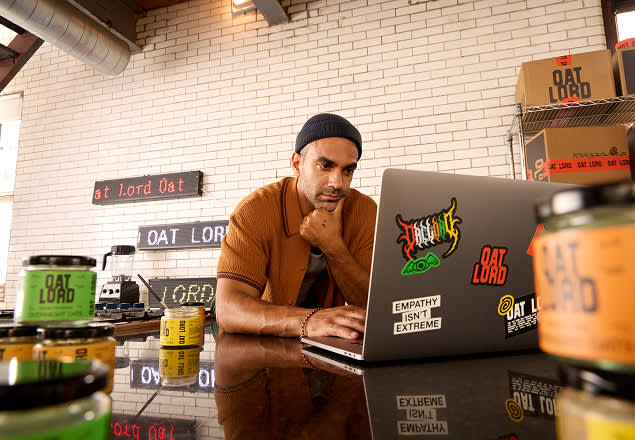
More than half of e-commerce customers report saving time on reporting and analytics when using Mailchimp.*
Personalize the customer journey without the complexity
The most effective marketing reacts to what customers actually do. Marketing automation flows work on an "if/then" philosophy, triggering the right message at the right moment.
-
Visualizing the journey:
Marketing automation flows let you map out customer paths so you can see exactly where someone moves from email to your website to SMS and back. Mailchimp customers generated up to 9X more revenue with automation flows.*
-
The "I tried to..." factor:
Behavioral targeting catches friction in real time. When someone tries to buy a product that's out of stock or abandons their cart, you trigger a message that solves their problem.
-
Strategic channel mix:
SMS marketing works when you need urgency (flash sales, reminders), while email marketing gives you space for detailed product information that needs more than 160 characters.
Mailchimp users saw up to a 97% higher click rate when they used both email and SMS.*
Show up for key moments with omnichannel marketing
High-open transactional email and SMS are essential customer service tools. These critical touchpoints strengthen your omnichannel strategy by delivering the information customers need most.
-
Seamless fulfillment:
Transactional emails for order confirmations, password resets, and shipping updates should carry the same visual identity as your promotional emails, not look like they came from a different company.
-
Real-time reliability:
When someone completes a purchase or resets their credentials, they expect instant confirmation. Mailchimp delivers these alerts with less than 1 second median delivery speed and an average delivery rate exceeding 99%.
-
Turning data into opportunity:
Every transactional email creates a chance to trigger your next marketing move, whether that's a check-in three days after delivery or a cross-sell based on what they just bought.
Let AI handle the math so you can handle the brand
Omnichannel marketing platforms with AI marketing tools take over pattern recognition work so you can focus on creative strategy. Here's what automation can do for you:
-
Predictive demographics:
Instead of guessing who might buy or leave, the system analyzes behavior patterns and targets customers based on their likelihood to purchase or churn before either happens.
-
Send time optimization:
Rather than scheduling emails for when it's convenient for you, the platform calculates when each subscriber is most likely to open their inbox and delivers messages then.
-
Generative AI & Content Studio:
AI creates unique variations of your copy and helps organize visual assets so everything from email headers to SMS messages stays on-brand without recreating files from scratch.
Try our Standard plan for free!
Find out why customers see up to 24x ROI* using the Standard plan with a risk-free 14-day trial†. Cancel or downgrade to our Essentials or basic Free plans at any time.
Find out why customers see up to 24x ROI* using the Standard plan with a risk-free 14-day trial†. Cancel or downgrade to our Essentials or basic Free plans at any time.
Find out why customers see up to 27x ROI* using the Standard plan with a 14-day trial†. Cancel or downgrade to our Essentials or basic Free plans at any time.
Find out why customers see up to 27x ROI* using the Standard plan with a 14-day trial†. Cancel or downgrade to our Essentials or basic Free plans at any time.
Get 15% off our Standard plan
Businesses with 10,000+ contacts can save 15% on their first 12 months.† Keep your discount if you change to Premium or Essentials. Cancel or downgrade to our basic Free plan at any time.
Businesses with 10,000+ contacts can save 15% on their first 12 months.† Keep your discount if you change to Premium or Essentials. Cancel or downgrade to our basic Free plan at any time.
Businesses with 10,000+ contacts can save 15% on their first 12 months.† Keep your discount if you change to Premium or Essentials. Cancel or downgrade to our basic Free plan at any time.
Businesses with 10,000+ contacts can save 15% on their first 12 months.† Keep your discount if you change to Premium or Essentials. Cancel or downgrade to our basic Free plan at any time.
-
Generative AI features
-
Actionable insights into audience growth and conversion funnels
-
Enhanced automations
-
Custom-coded email templates
-
Customizable Popup forms
-
Personalized onboarding
Standard
Send up to 6,000 emails each month.Send up to 100 emails risk-free—no credit card required. Save a payment method to unlock 5,900 sends for the rest of your free trial.
Free for 14 days
Then, starts at $20 per month†
per month for 12 months
Then, starts at per month†
†See Free Trial Terms. Overages apply if contact or email send limit is exceeded. Learn More
†See Free Trial Terms. Overages apply if contact or email send limit is exceeded. Learn More
†See Free Trial Terms. Overages apply if contact or email send limit is exceeded. Learn More
Save 15% on the ultimate expert-assisted platform for growth
Engage your audience and increase sales with 15% off your first 12 months†. Plus, get expert support to help migrate your data and provide strategic guidance—exclusive to the Premium plan.
- Phone & Priority Support
- Custom-Coded and Pre-built Email Templates
- Multivariate and A/B Testing
- Enhanced marketing automation flows
- Dedicated Personalized Onboarding
- Predictive Segmentation
Larger contact list? Call +1 (800) 330-4838 for custom pricing, annual plans, demos, and more. Contact sales.
Premium
Send up to 150,000 emails each month.
Save 15% on 10,000+ contacts
per month for 12 months
Then, starts at per month†
†See Offer Terms. Overages apply if contact or email send limit is exceeded. Learn More
Larger contact list? Call +1 (800) 330-4838 for custom pricing, annual plans, demos, and more. Contact sales.
FAQs
-
The distinction comes down to product versus person. Multichannel marketing focuses on putting your brand across multiple platforms, like social media, email, paid ads, and physical advertising. The priority is making sure your product appears everywhere customers might be.
Omnichannel marketing shifts the focus to how customers move between those platforms. Instead of treating each marketing channel as a separate broadcast opportunity, you create a connected experience that follows the individual.
When someone clicks an ad but doesn't purchase, multichannel stops there. Omnichannel recognizes the same person and triggers a relevant follow-up, whether through email, SMS, or another channel. One approach centers on your product's visibility, the other centers on the customer's journey.
-
Retention improves when you provide relevant communication based on what customers have already done. When you track purchases and engagement across channels, you avoid sending redundant offers.
For example, someone who bought running shoes doesn't need another promotion for running shoes. They need suggestions for complementary products like socks or gear, or information about relevant events.
This approach shifts your brand from a source of promotional noise to a helpful resource that understands their needs. That understanding builds trust, which drives repeat business.
Check out these omnichannel marketing examples to see how brands implement this strategy.
-
Omnichannel involves complexity across multiple systems, so concerns about team size are valid. However, Mailchimp's automation and AI handle the operational work of data syncing and message timing.
You don't need dedicated staff for each channel or manual processes to keep customer records current. An omnichannel content strategy can be manageable for businesses of any size when the platform automates the technical infrastructure.
-
Mailchimp connects email for detailed communication, SMS for time-sensitive messages, social media for brand discovery, and your website for commerce.
The platform also integrates with offline and in-store systems through connections with Shopify, QuickBooks, and point-of-sale software. This integration means a customer's in-store purchase, website browsing, email engagement, and social media activity all contribute to a single unified profile.
-
E-commerce businesses benefit significantly from omnichannel, but the approach applies to any organization that interacts with customers across multiple touchpoints.
For example:
- Restaurants coordinate promotional emails with SMS reservation systems.
- Professional services firms distribute educational content and follow up based on which topics generate engagement.
- Healthcare practices manage appointment scheduling across email and text messaging.
As omnichannel trends continue to evolve, the methodology remains valuable wherever businesses need to maintain consistent customer relationships across channels.
Millions of users trust us with their marketing. You can too.
*Disclaimers
- More than half of e-commerce customers: Based on a survey of Mailchimp customers conducted by UserEvidence on behalf of Intuit between August and September 2025
- 9X more revenue with automation flows: Based on total revenue generated from bulk emails by users’ of Marketing Automation Flows from January 2023 - January 2025. Marketing Automation Flows functionality varies by plan type.
- 97% higher click rate: Based on US users who sent both email and SMS campaigns compared to users who sent only email campaigns from 8/1/23 to 1/05/25.