How to Calculate Email and SMS Marketing ROI
Every dollar you spend on marketing should earn its place. Here's how to measure the return on your email and SMS campaigns, and what you can do to improve it.
What is marketing ROI and why does it matter?
Return on investment (ROI) measures how much revenue your marketing generates compared to what you spent. In email marketing and SMS, ROI is the clearest indicator of whether your campaigns are healthy, efficient, and worth scaling. Without it, you're guessing. Here's why knowing how to calculate marketing ROI matters for your bottom line:

Financial accountability helps justify spend:
When you can show leadership exactly how much revenue a campaign brought in versus what it cost, budget conversations get a lot easier. ROI data also helps you spot underperforming channels early so you can reallocate spend before wasting another quarter.

Efficiency is more valuable than list volume:
A list of 50,000 subscribers means nothing if those contacts aren't converting. Focusing on return per send rather than total reach gives you a much more honest picture of campaign performance.
How to calculate the ROI of email marketing
The email marketing ROI formula is straightforward. Once you understand what goes into each side of the equation, you can benchmark any campaign against your goals.
The ROI formula looks like this:
(Gain from Investment − Cost of Investment) / Cost of Investment × 100
Here's how to apply it accurately:

Defining gain requires accurate attribution:
Revenue from a specific email campaign needs proper tracking. Use UTM parameters, attribution models, or tracking pixels to connect purchases back to the exact send that drove them.

Accounting for cost includes hidden expenses:
Don't just count your platform subscription. Factor in design and copywriting labor, third-party integrations, and any tools you pay for to build and send campaigns. Underestimating costs inflates your ROI and leads to bad decisions.
Mailchimp e-commerce users saw up to 20x ROI in the first 6 months after launching their first email campaign.*

How to calculate SMS marketing ROI
SMS marketing uses the same basic ROI formula, but the cost structure is different. With email, most of your investment goes toward platform fees and creative. With SMS, per-message costs add up fast and need to be front and center in your calculation. Here's what to focus on when measuring SMS ROI:
-
Measuring SMS engagement focuses on action:
Open rates are less useful for SMS since nearly every text gets read. Instead, measure click-through rates and conversion rates to understand whether your messages are actually driving revenue.
-
The SMS ROI formula accounts for per-message costs:
Apply the same formula as email marketing ROI— gain minus cost, divided by cost, times 100 — but make sure the cost side reflects your per-message rate multiplied across your full send volume.
-

The value of speed impacts revenue:
SMS has a 98% open rate, and most texts are read within minutes. That speed means faster conversions and quicker ROI realization compared to channels where engagement trickles in over days.
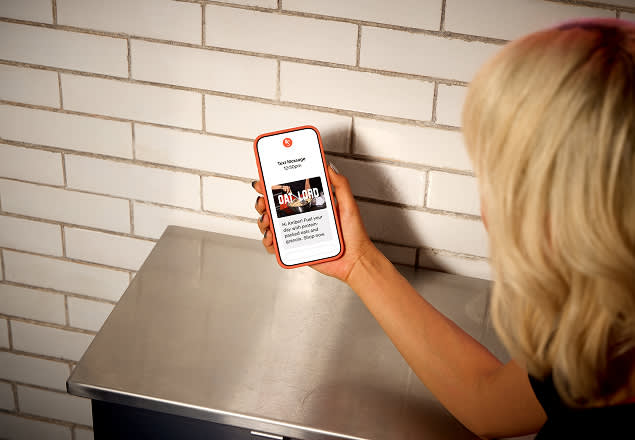
Mailchimp SMS e-commerce users saw up to a 22x ROI after launching their first SMS Marketing campaign*
Factors that impact your marketing ROI
ROI isn't static. The number you calculate today will shift based on how well you maintain your lists and how strategically you target your audience. These factors have the biggest impact on long-term returns:
-
List hygiene determines long-term value:
So, how much is your email list truly worth? That depends entirely on engagement. A clean list of active subscribers who open, click, and buy will always outperform a bloated list full of inactive contacts dragging down your metrics.
-
The power of segmentation increases relevance:
Moving away from batch-and-blast sends and toward advanced segmentation reduces wasted spend and puts the right message in front of the right people. More relevance means more conversions.
-
Automation acts as an ROI multiplier:
Triggered emails like abandoned cart reminders and welcome sequences run on their own once they're set up. That means ongoing revenue with zero manual effort per send. Mailchimp customers saw up to 9x more revenue with automation flows.*
Mailchimp users saw up to a 97% higher click rate when they used both email and SMS together.*
Try our Standard plan for free!
Find out why customers see up to 24x ROI* using the Standard plan with a risk-free 14-day trial†. Cancel or downgrade to our Essentials or basic Free plans at any time.
Find out why customers see up to 24x ROI* using the Standard plan with a risk-free 14-day trial†. Cancel or downgrade to our Essentials or basic Free plans at any time.
Find out why customers see up to 27x ROI* using the Standard plan with a 14-day trial†. Cancel or downgrade to our Essentials or basic Free plans at any time.
Find out why customers see up to 27x ROI* using the Standard plan with a 14-day trial†. Cancel or downgrade to our Essentials or basic Free plans at any time.
Get 15% off our Standard plan
Businesses with 10,000+ contacts can save 15% on their first 12 months.† Keep your discount if you change to Premium or Essentials. Cancel or downgrade to our basic Free plan at any time.
Businesses with 10,000+ contacts can save 15% on their first 12 months.† Keep your discount if you change to Premium or Essentials. Cancel or downgrade to our basic Free plan at any time.
Businesses with 10,000+ contacts can save 15% on their first 12 months.† Keep your discount if you change to Premium or Essentials. Cancel or downgrade to our basic Free plan at any time.
Businesses with 10,000+ contacts can save 15% on their first 12 months.† Keep your discount if you change to Premium or Essentials. Cancel or downgrade to our basic Free plan at any time.
-
Generative AI features
-
Actionable insights into audience growth and conversion funnels
-
Enhanced automations
-
Custom-coded email templates
-
Customizable Popup forms
-
Personalized onboarding
Standard
Send up to 6,000 emails each month.Send up to 100 emails risk-free—no credit card required. Save a payment method to unlock 5,900 sends for the rest of your free trial.
Free for 14 days
Then, starts at 0 per month†
per month for 12 months
Then, starts at per month†
†See Free Trial Terms. Overages apply if contact or email send limit is exceeded. Learn More
†See Free Trial Terms. Overages apply if contact or email send limit is exceeded. Learn More
†See Free Trial Terms. Overages apply if contact or email send limit is exceeded. Learn More
Save 15% on the ultimate expert-assisted platform for growth
Engage your audience and increase sales with 15% off your first 12 months†. Plus, get expert support to help migrate your data and provide strategic guidance—exclusive to the Premium plan.
- Phone & Priority Support
- Popup Forms
- Multivariate and A/B Testing
- Enhanced marketing automation flows
- Dedicated Personalized Onboarding
- Predictive Segmentation
Larger contact list? Call +1 (800) 330-4838 for custom pricing, annual plans, demos, and more. Contact sales.
Premium
Send up to 150,000 emails each month.
Save 15% on 10,000+ contacts
per month for 12 months
Then, starts at per month†
†See Offer Terms. Overages apply if contact or email send limit is exceeded. Learn More
Larger contact list? Call +1 (800) 330-4838 for custom pricing, annual plans, demos, and more. Contact sales.
Why Mailchimp is the most effective platform for driving ROI
When your email and SMS data live in one platform, calculating and improving ROI is easier. Fragmented tools mean fragmented data, and fragmented data means blind spots in your reporting.
-
Integrated reporting simplifies attribution:
Seeing email and SMS performance in a single dashboard means you can compare channels side by side and reallocate budget based on actual return, not assumptions.
-
Lowering the cost side of the equation:
No-code tools and AI-driven content suggestions cut down on the design and copywriting hours that inflate campaign costs. Less labor per send means a better return on every dollar.
-
Reliability and deliverability protect your investment:
If your email lands in spam, the ROI on that send is zero. E-commerce customers who reported email delivery rate improvement after implementing Mailchimp saw an average increase of 62%.*
FAQs
-
Industry benchmarks typically place email marketing ROI around $36–$42 for every $1 spent, though this varies widely by industry and campaign type. A strong ROI depends on your margins, audience quality, and how well you've optimized your sends over time.
-
Assign a dollar value to your lead conversions or proxy actions, such as form fills, demo requests, or consultation bookings. Then plug that estimated value into the standard ROI formula in place of direct revenue.
-
Comparing SMS vs. email marketing, SMS tends to drive higher engagement rates and faster conversions, but it also costs more per message than email.
Email typically delivers a higher overall ROI because of its low send costs, while promotional and transactional SMS excels at time-sensitive, high-intent messages. The strongest results come from using both channels together.
-
ROAS (Return on Ad Spend) measures gross revenue generated from a specific campaign relative to the ad spend on that campaign alone.
ROI factors in all associated costs, including software, labor, and creative production, to show true net profitability. ROAS tells you if a campaign performed well; ROI tells you if it was actually profitable.
Millions of users trust us with their marketing. You can too.
*Disclaimers
- 6-Month 20X ROI: Based on e-commerce revenue attributable to all paid plan users’ Mailchimp email campaigns from 180 days of first email campaign launch during 12/1/24 - 11/30/25
- Up to 22x ROI: Based on e-commerce revenue attributable to Mailchimp users’ SMS Marketing campaigns and Mailchimp SMS spend (not including plan cost) within one year of launch of first SMS campaign from 10/01/24 to 10/17/25. ROI calculation requires an e-commerce store that is connected to a Mailchimp account. Excludes Short code SMS. Results may vary.
- 9x more revenue: Based on total revenue generated from bulk emails by users’ of Marketing Automation Flows from January 2023 - January 2025. Marketing Automation Flows functionality varies by plan type.
- 97% Higher Click Rate: Based on US users who sent both email and SMS campaigns compared to users who sent only email campaigns from 8/1/23 to 1/05/25.
- E-commerce customers: Based on a survey of Mailchimp customers conducted by UserEvidence on behalf of Intuit between August and September 2025.