Use Email and SMS together for better engagement
Combine your email and SMS marketing to reach customers when and where they're ready to respond.
Root your email and SMS marketing in a single customer view
Email and SMS marketing work best when both channels draw from the same customer data. A unified data foundation ensures consistent experiences across every touchpoint. Here's what this foundation provides:
-
Unified customer profiles:
Connecting disparate identifiers like email addresses and phone numbers prevents you from treating a returning customer like a stranger across different channels.
-
Continuous conversation logic:
When someone takes action in one channel, that behavior should inform what happens next in the other channel, creating a seamless journey without repetitive messages.
Balance the marathon and the sprint with email and sms
Knowing when to use SMS vs. email marketing is what separates a scattered strategy from a balanced one. The two channels aren't interchangeable — they each have a distinct role based on urgency and depth. Here's how email and sms complement each other:

Long-form storytelling:
Email marketing gives you space for brand education and inspiration that customers can revisit when they have time to engage with detailed content.

Immediate impact alerts:
The lock screen on mobile devices is where "right now" moments belong. SMS marketing is ideal for urgent updates, time-sensitive reminders, and brief notes that demand attention within minutes, not hours.
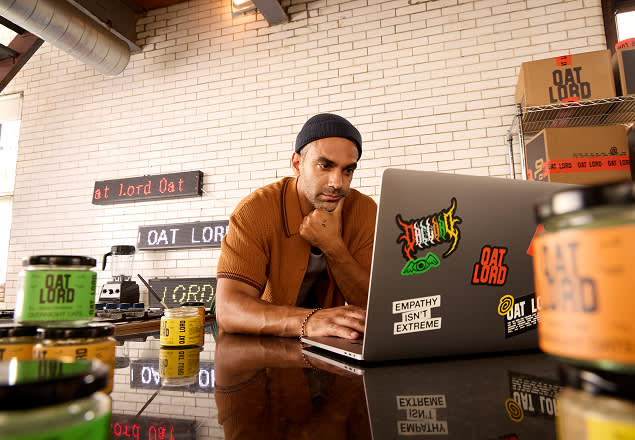
A majority of Mailchimp SMS users surveyed wish they had implemented SMS marketing sooner.*
Listen for customer signals before hitting send
Responsive marketing beats scheduled broadcasting. Automated logic allows your brand to react to customer behavior instead of following a rigid calendar.
-
Behavioral triggers:
Real-time actions determine which channel to use next. For example, using email and SMS together means sending a follow-up text only when a critical email remains unopened after a set period.
-
Friction reduction:
Cross-channel paths help customers complete tasks by meeting them where they are, like sending a gentle email reminder followed by a mobile nudge if they don't finish checkout.
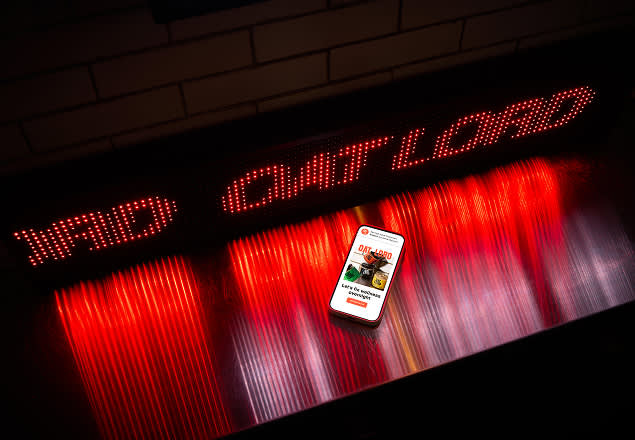
Mailchimp provides over 45 behavior-based triggers to automate these responsive paths.*
Use everyday moments to earn long-term trust
Utility-based messaging drives loyalty. Reliability in administrative moments strengthens your overall marketing relationship.
-
Utility-first communication:
Providing peace of mind through order updates and receipts on a customer's preferred channel establishes you as helpful, not just promotional.
-
Brand voice consistency:
Your brand voice and quality standards should apply to utility-focused messages and automated alerts, not just marketing campaigns.
Mailchimp users saw up to a 97% higher click rate when they used both email and text messaging.*
Use AI to handle the heavy lifting of email and SMS
Smart tools let you provide a personal touch at scale. Technology manages complexity so you can focus on strategy and creative work.
-
Channel preference modeling:
Data identifies which segments prefer a mobile-first experience versus those who engage more with detailed email content, allowing you to prioritize accordingly.
-
Temporal optimization:
Messages arrive when customers are most likely to find them useful, not just when you're ready to send them.
Try our Standard plan for free!
Find out why customers see up to 24x ROI* using the Standard plan with a risk-free 14-day trial†. Cancel or downgrade to our Essentials or basic Free plans at any time.
Find out why customers see up to 24x ROI* using the Standard plan with a risk-free 14-day trial†. Cancel or downgrade to our Essentials or basic Free plans at any time.
Find out why customers see up to 27x ROI* using the Standard plan with a 14-day trial†. Cancel or downgrade to our Essentials or basic Free plans at any time.
Find out why customers see up to 27x ROI* using the Standard plan with a 14-day trial†. Cancel or downgrade to our Essentials or basic Free plans at any time.
Get 15% off our Standard plan
Businesses with 10,000+ contacts can save 15% on their first 12 months.† Keep your discount if you change to Premium or Essentials. Cancel or downgrade to our basic Free plan at any time.
Businesses with 10,000+ contacts can save 15% on their first 12 months.† Keep your discount if you change to Premium or Essentials. Cancel or downgrade to our basic Free plan at any time.
Businesses with 10,000+ contacts can save 15% on their first 12 months.† Keep your discount if you change to Premium or Essentials. Cancel or downgrade to our basic Free plan at any time.
Businesses with 10,000+ contacts can save 15% on their first 12 months.† Keep your discount if you change to Premium or Essentials. Cancel or downgrade to our basic Free plan at any time.
-
Generative AI features
-
Actionable insights into audience growth and conversion funnels
-
Enhanced automations
-
Custom-coded email templates
-
Customizable Popup forms
-
Personalized onboarding
Standard
Send up to 6,000 emails each month.Send up to 100 emails risk-free—no credit card required. Save a payment method to unlock 5,900 sends for the rest of your free trial.
Free for 14 days
Then, starts at 0 per month†
per month for 12 months
Then, starts at per month†
†See Free Trial Terms. Overages apply if contact or email send limit is exceeded. Learn More
†See Free Trial Terms. Overages apply if contact or email send limit is exceeded. Learn More
†See Free Trial Terms. Overages apply if contact or email send limit is exceeded. Learn More
Save 15% on the ultimate expert-assisted platform for growth
Engage your audience and increase sales with 15% off your first 12 months†. Plus, get expert support to help migrate your data and provide strategic guidance—exclusive to the Premium plan.
- Phone & Priority Support
- Popup Forms
- Multivariate and A/B Testing
- Enhanced marketing automation flows
- Dedicated Personalized Onboarding
- Predictive Segmentation
Larger contact list? Call +1 (800) 330-4838 for custom pricing, annual plans, demos, and more. Contact sales.
Premium
Send up to 150,000 emails each month.
Save 15% on 10,000+ contacts
per month for 12 months
Then, starts at per month†
†See Offer Terms. Overages apply if contact or email send limit is exceeded. Learn More
Larger contact list? Call +1 (800) 330-4838 for custom pricing, annual plans, demos, and more. Contact sales.
FAQs
-
Base your decision on three factors: urgency, information lifespan, and content depth. If the message loses value after a few hours (flash sale ending tonight, appointment in 2 hours), send a text. If it requires visual elements, a detailed explanation, or multiple links, use email.
If something needs immediate attention but also benefits from detail, send the text first with a link to a fuller explanation.
-
Syncing your workflows prevents over-messaging. Think of it as channel parity — when one channel is active, the other rests.
If someone receives a promotional email on Monday, wait before sending a promotional text. Transactional messages (order confirmations, shipping updates) don't count against this balance because customers expect and need that information.
Set frequency caps that account for total touchpoints across both channels, not each channel independently. Most brands find success with 2-4 marketing emails per week and 1-2 marketing texts, but this varies by industry and customer expectations.
-
Progressive profiling typically outperforms all-in-one forms. Start with the relationship first, then add the secondary channel once trust is established. Ask for email at signup, then invite engaged subscribers to opt into SMS after they've experienced value from your emails.
Converting email to SMS subscribers this way tends to produce higher quality opt-ins because those people already know your brand. If you do collect both simultaneously, consider double opt-in for SMS to ensure genuine interest and regulatory compliance.
-
Character limits force you to distill your brand voice to its essence. Start with your full email message, then identify the core emotion and action you want to convey.
If your email brand voice is friendly and encouraging, your text might say "You're almost there! Finish your order and get free shipping today" instead of a clinical "Complete checkout now." If your brand is sophisticated and direct, keep texts brief and specific without trying to cram in unnecessary personality.
The tone should feel like the same person speaking, just adapted to the medium. Test your SMS copy by reading it aloud. If it sounds like something a real person from your brand would text a friend (adjusted for professionalism), you're on the right track.
Millions of users trust us with their marketing. You can too.
*Disclaimers
- A majority of Mailchimp SMS users: Based on a survey of Mailchimp customers conducted by UserEvidence on behalf of Intuit between August and September 2025.
- 97% higher click rate: Based on US users who sent both email and SMS campaigns compared to users who sent only email campaigns from 8/1/23 to 1/05/25.