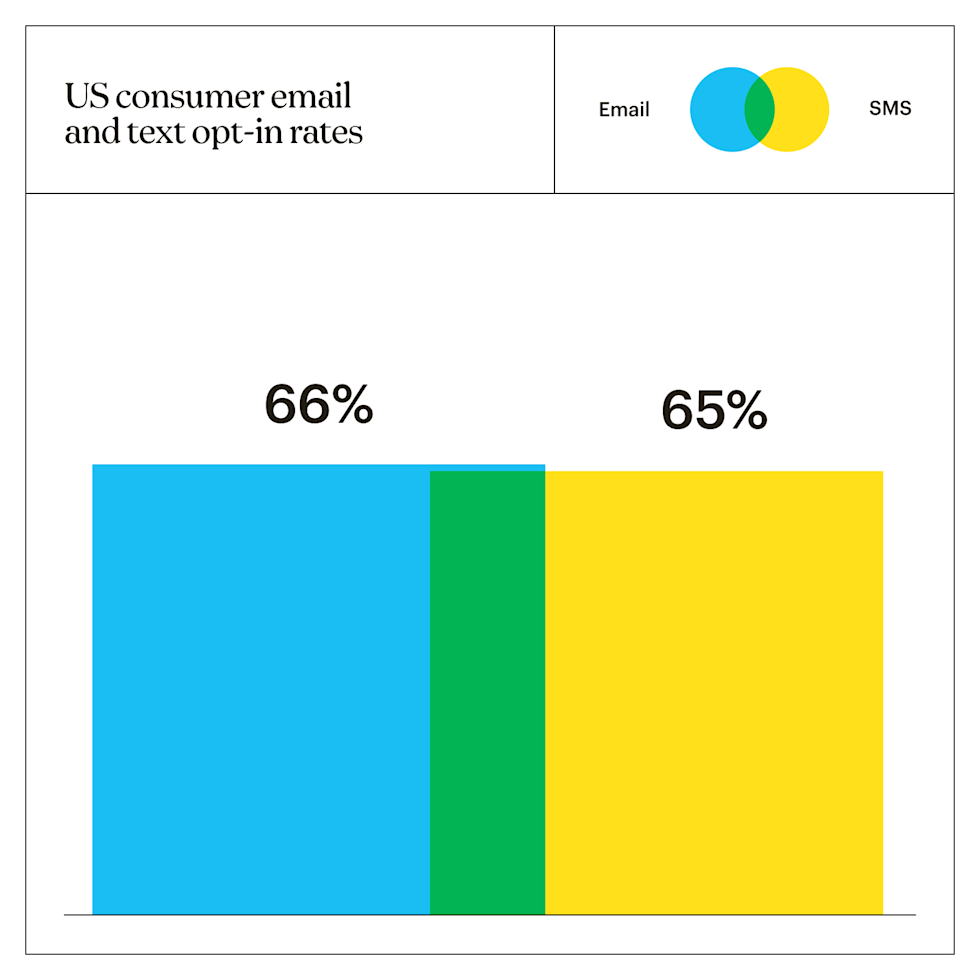
The United States leads in subscriber enthusiasm. It also leads in spam sensitivity. According to The Art of the Opt-In, 2026 research from Intuit Mailchimp and Ascend2, 66% of US consumers have opted into email communications, and 65% have opted into text messaging — the highest SMS opt-in rate of any country surveyed.
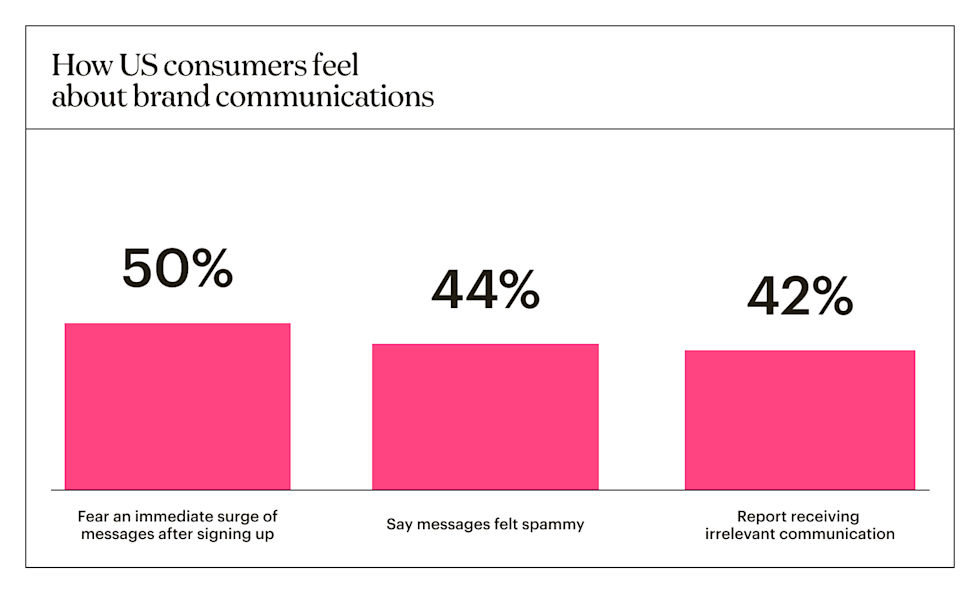
At the same time:
- 50% fear an immediate surge of messages after signing up.
- 44% say messages felt spammy — the highest rate globally.
- 42% report receiving irrelevant communication.
Source: Intuit Mailchimp and Ascend2, The Art of the Opt-In, February 2026
American consumers are open to brand relationships, but their tolerance for misuse is shrinking.
In a market where high channel adoption by consumers must contend with constant digital noise, trust determines whether access translates into sustained engagement.
Subscriptions are increasing, despite US consumer concerns
US consumers participate actively across channels. They sign up, they complete popups, and they provide phone numbers at scale.
- 37% have completed a popup form — the highest globally.
- 86% are comfortable with two-step opt-in processes.
- SMS adoption outpaces every other region studied.
This reflects a consumer base that is comfortable exchanging contact info and confident navigating online value propositions. It also indicates that volume is the norm in this communications environment. Half of US consumers anticipate message overload the moment they subscribe and nearly half describe post-opt-in messaging as irrelevant or spam-like. These reactions point to a broader market reality: access is easy to secure, but attention is increasingly difficult to maintain.
US marketers focus on acquisition over retention
US marketing teams recognize the importance of trust.
- 53% say audience trust is extremely important in driving opt-ins — the highest across regions.
- 40% cite completing sign-ups as their top challenge.
- 50% believe better timing and targeting of opt-in prompts would improve results.
The emphasis on timing, targeting, and prompt placement reflects a mature performance culture. US marketers understand how to drive conversion.
Yet only 30% rank “how much information to collect” as a significant concern, suggesting that optimization efforts remain concentrated on acquisition rather than retention.
The opportunity now lies in strengthening what happens immediately after that conversion.
Many US consumers think you're sending spam
While the US market doesn't suffer from low engagement, it struggles with a spammy reputation.
Consumers willingly exchange their data when the value exchange is clear. They expect communication that aligns with the promise made at the moment of sign-up. When frequency escalates or relevance declines, trust deteriorates quickly.
In a high-volume ecosystem, early impressions shape long-term retention. The first messages a subscriber receives often determine whether the relationship deepens or dissolves.
When 44% of consumers describe messages as spam-like, the issue extends beyond annoyance. It becomes a growth constraint. As the findings from the global report suggest, spam sensitivity shortens subscriber lifespan, weakens engagement metrics, and limits lifetime value.
In this environment, sustainable performance depends on setting clear expectations and delivering consistent, relevant messages.
Next Steps for US Marketers
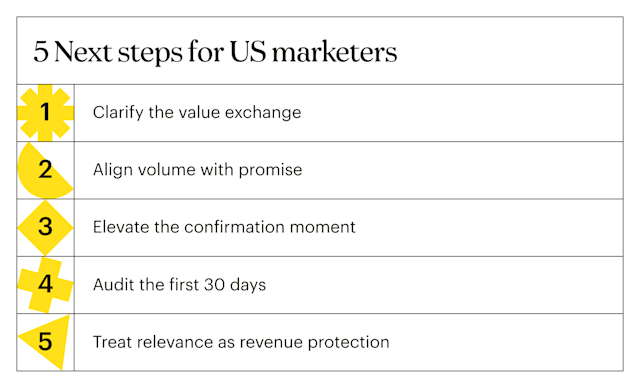
The US market presents a powerful advantage: consumers are ready to engage. Converting that readiness into growth requires building trust into your marketing strategy, not merely paying lip service to it.
1. Clarify the value exchange
State clearly what subscribers will receive, how often they will hear from you, and how their data supports that experience. Transparency reduces uncertainty and strengthens commitment.
2. Align volume with promise
If consumers anticipate overload, proactive frequency management becomes a competitive advantage. Honor the expectations set at sign-up.
3. Elevate the confirmation moment
With 86% of consumers comfortable completing a second opt-in step, confirmation emails and texts offer an opportunity to reinforce clarity and control.
4. Audit the first 30 days
The initial onboarding period shapes both perception and retention. Ensure early messages reflect the relevance and tone promised during acquisition.
5. Treat relevance as revenue protection
In a market with the highest global spam sensitivity, segmentation and behavioral targeting safeguard retention and lifetime value.
The future of US opt-in strategies
The US market combines high channel adoption among consumers with rising sensitivity to spam and misuse.
This dynamic places pressure on brands to move beyond volume-driven growth and toward experience-led strategies.
Strong opt-in rates demonstrate that consumers are open to marketing messages. But elevated spam sensitivity should be a warning to marketers not to take advantage of that openness.
Brands that design acquisition and onboarding as a cohesive trust-building journey will sustain engagement longer, reduce churn, and maximize subscriber value.
The future of subscriber growth in the United States will belong to brands that pair performance precision with expectation management.