Reach app users with personalized, behavior-based marketing campaigns
No matter what industry you’re in—SaaS, Fintech, gaming, or anything else—get all your app and marketing data in one place, so you can reach people with personalized, behavior-based campaigns.

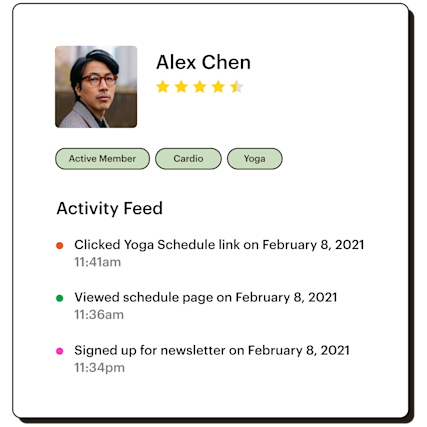
Act on user activity in your mobile or web app
With Mailchimp’s open API, you can connect your users’ in-app activity and marketing data in your audience dashboard, so you can create personalized campaigns. You can have your own developer connect your app with our API documentation or hire a Mailchimp expert to help.
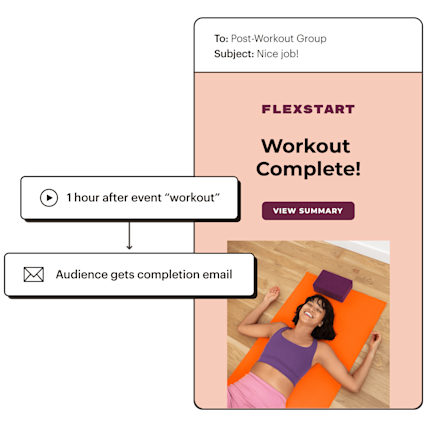
Keep users engaged with event-based automations
With Mailchimp’s behavioral targeting tools, you can personalize your emails based on people’s actions—and automate them so you can focus on other things. Send emails when users hit milestones like downloads, user registration, subscription renewal, and more to drive re-engagement and acquire new customers.
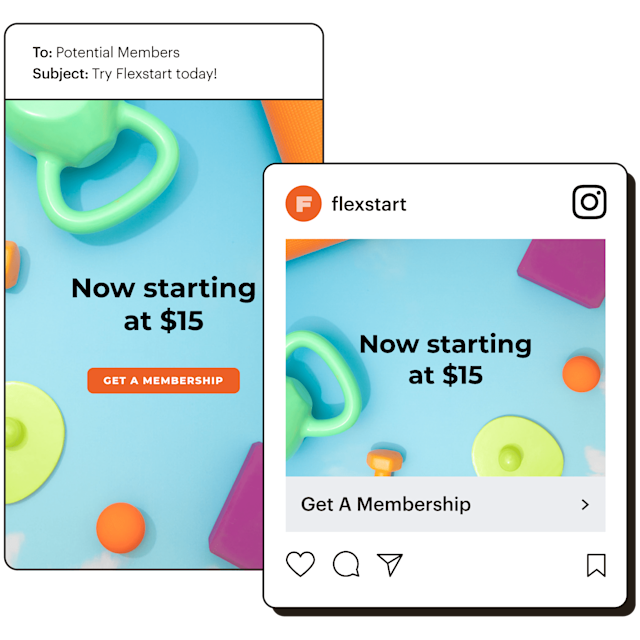
Reach your customers wherever they are
Grab their attention when they’re browsing the web, scrolling through social feeds, or checking their mailbox when you launch a multichannel campaign.
Get a holistic view of your data by connecting the rest of your tools
When you integrate all the tools in your stack, you can easily see what’s working and what isn’t in your marketing mix. Mailchimp integrates with over 200 apps and web services so you see all your data in one place.
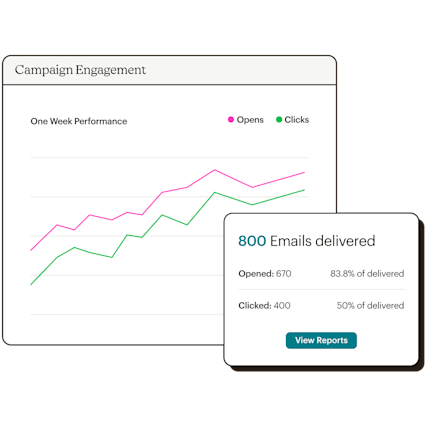
Optimize your marketing strategy with clear reporting
Our reports make it easy to monitor campaign performance, audience growth, clicks, and more, so you can make smart decisions about how to spend your marketing budget.
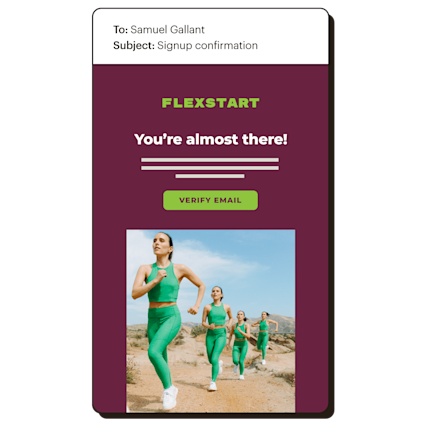
Customize your transactional emails
Send personalized emails to your users, and be there when they need you with signup confirmations, password resets, and more.
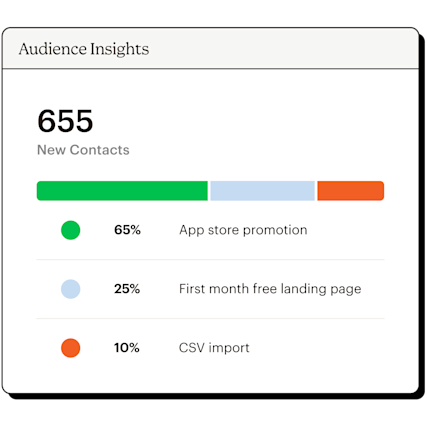
Learn more about your people with audience insights
Our audience dashboard makes it easy for you to spot patterns in customer behavior, see trends in engagement, and better understand the people using your app. We’ll even create pre-built segments for you to target based on user activity, demographics, and more.

“The hook back to our database is incredibly important, because it keeps our data up to date, relevant, and accurate so that when we're emailing, we are doing so at the right point in someone’s customer life cycle.”
Daisy Downs, co-founder of UrbanSitter
Supporting you from day one
We’re here to help you connect your app, set up automations, or point you in the right direction whenever you get lost. Get the help you need with marketing guides, step-by-step tutorials, an award-winning support team, and more.
"Mailchimp’s support team is awesome. They’re like family, holding your hand through your business."


FAQs
-
Mobile app marketing is the strategies and tools used to promote an app, bring in new users, and keep them coming back. It spans channels like email, push notifications, in-app messaging, social ads, and retargeting, and it works best when those channels are connected rather than running in isolation. Downloads alone don't build a business. Someone can install your app and never open it again. App marketing closes that gap by turning installs into active, loyal users who generate real revenue. Mailchimp supports this across multiple channels, connecting your app data to the marketing tools that drive engagement and retention.
-
An app marketing strategy is a plan for acquiring users, guiding them through onboarding, keeping them engaged, and winning them back when they go quiet. It pulls together your channels, your data, and your messaging into a system that works across the full user lifecycle. Here are the core components to build around:
- Onboarding: The first few interactions set the tone. A well-timed welcome sequence helps new users get value quickly, which is one of the strongest predictors of long-term retention.
- Behavioral triggers: Rather than sending the same message to everyone, a strong app marketing strategy responds to what users actually do — or stop doing — inside your app.
- Re-engagement: Users drift. Targeted campaigns that acknowledge a lapse and offer a reason to return can recover users who would otherwise churn quietly.
- Multichannel reach: Meeting users where they are — email, social ads, push notifications — gives your strategy more surface area and better odds of landing the message at the right moment.
Mailchimp supports each stage by connecting user data, enabling behavioral segmentation, and automating the touchpoints that matter most.
-
Mailchimp connects to your app through an open API or Mobile SDK, which means user activity flows directly into your marketing data. From there, you can build automations triggered by real behavior across digital touchpoints, reach users across email and digital ads, and track how campaigns are performing — all from one place. Here's what that looks like in practice:
- Behavioral automations: Set up campaigns that fire when users hit specific milestones, go inactive, or take an action worth following up on.
- Cross-channel reach: Email, social ads, and digital ads work together so your app marketing isn't limited to a single touchpoint.
- Campaign reporting: Monitor opens, clicks, and conversions alongside audience trends to understand what's working and where to adjust.
-
Mailchimp supports automations across the full user lifecycle. These include:
- Welcome and onboarding sequences: Triggered when a user registers, these campaigns introduce your app and guide new users toward their first meaningful action.
- Re-engagement campaigns: Sent to users who've gone inactive, these give people a reason to come back before they churn for good.
- Milestone emails: Triggered by events like downloads, upgrades, or renewals. These are moments worth acknowledging with a timely, relevant message.
- Subscription renewal reminders: Automated nudges that go out before a subscription lapses, reducing involuntary churn.
- Transactional emails: Order confirmations, password resets, receipts. These are the functional messages users expect to receive reliably.
-
You can connect using Mailchimp's open API, which your development team can implement directly. If you'd rather not handle setup in-house, Mailchimp has a directory of certified experts who can manage the integration for you.
Once connected, user activity from your app flows automatically into your Mailchimp audience dashboard. From there, you can start segmenting, building automations, and running campaigns based on real behavioral data.
-
Mailchimp pulls your app and marketing data into one view, which makes it easier to understand who your users are and how they engage over time. Here's what you get access to:
- Pre-built segments: Organized by user activity, demographics, and behavior. These segments are ready to use without having to build from scratch.
- Engagement trends: The audience dashboard surfaces patterns so you can spot shifts before they become problems.
- Campaign performance data: Clicks, opens, and conversions tied back to the campaigns driving them.
-
Mobile marketing is the broader category, encompassing any marketing that reaches people on their phones, including SMS, mobile ads, and email. Marketing your mobile app is more specific: it focuses on acquiring and retaining users of a particular app, using that app's behavioral data to inform every campaign.
Mailchimp supports both. You can connect app-specific data to power behavioral automations while also reaching users through broader mobile marketing channels like social ads and email, giving you coverage across both strategies from one platform.