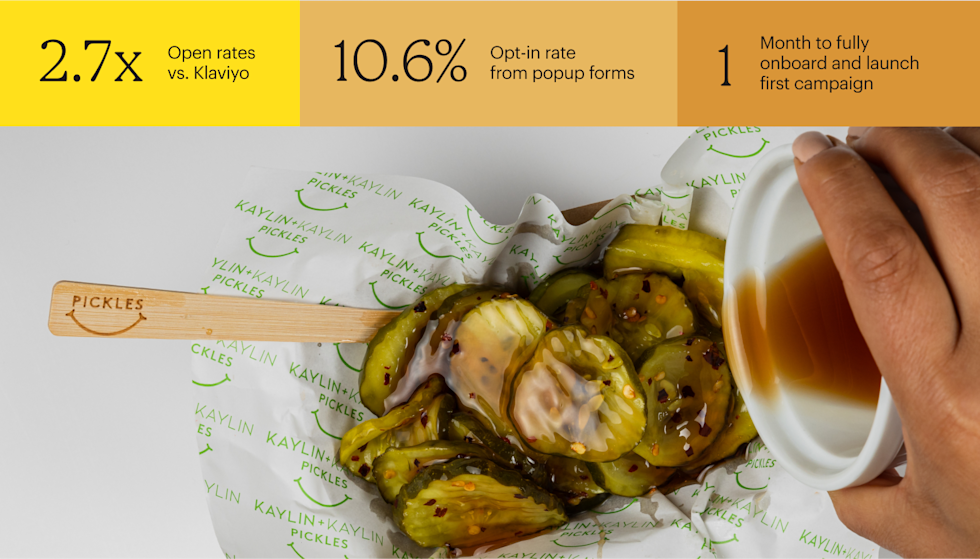
Pickles have long been a snack and sandwich-top staple. But Kaylin + Kaylin Pickles has turned them into a full-on experience, making them the star of the plate.
Founded by Scott Kaylin in 2020, Kaylin + Kaylin Pickles has shaken things up with their bold flavors inspired by classic New York-style pickles, selling them online and at a pickle tasting bar at Los Angeles’ Original Farmer’s Market. They also dreamed up a totally unique concept called TOPPED, which is exactly what it sounds like. There, you can find pickles loaded with toppings that range from spicy and savory to sweet, including a peanut butter, Nutella, and pretzel pickle boat.
Kaylin + Kaylin’s quirky approach to pickles has made them go viral, and their social media presence has helped them grow, leading to frequent sellouts of their products online. They’ve built a considerable list of fans who look for the email saying their favorite flavors are back in stock, so they can grab a jar (or 5) before they sell out again.
Email marketing is essential for them to keep their e-commerce sales steady. They need it to maintain and grow daily orders, and they track success through email metrics like open rates and click rates.
In early 2025, they decided it was time for a change in their email platform, so they made the jump from Klaviyo to Mailchimp. They wanted to find more effective ways to connect with their customers so they could drive higher engagement, which translates into more sales.
The challenge: Rising costs and lack of strategic support from Klaviyo, and switching to Mailchimp quickly
Kaylin + Kaylin Pickles faced growing pains as their email list grew, making their costs on Klaviyo creep higher and higher. "Klaviyo was just getting so ridiculously expensive and about to pass another cost threshold,” said their Social Media and Brand Manager, Ali Mann. They also weren’t using Klaviyo’s full suite of features, and they didn’t have the kind of strategic support they needed to make the most of the platform—including how to target customers effectively.
But switching to an entirely new platform presented its own set of risks. They worried about the time it would take to figure out the new system, and how quickly they could start sending emails through a new platform without losing momentum or engagement.