


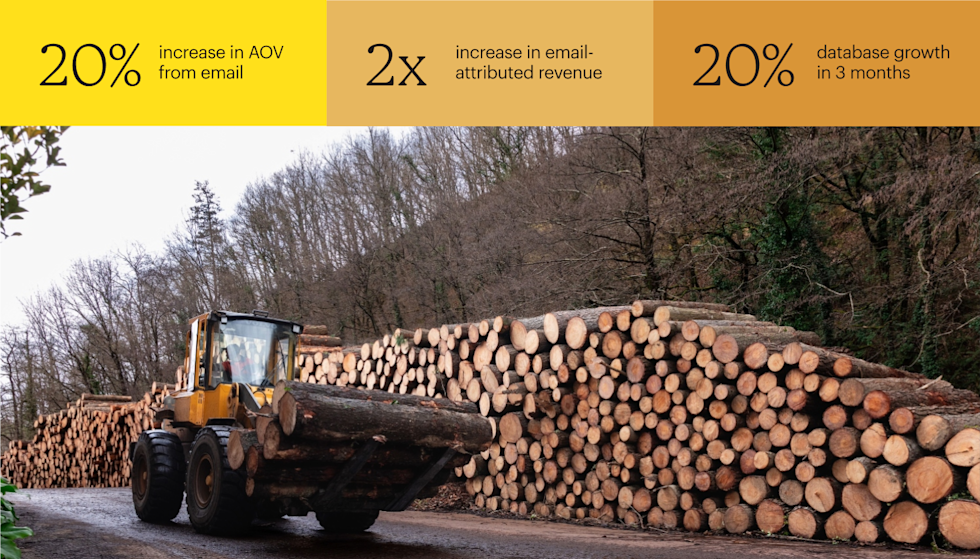
In the heart of the Basque Country, one family business has spent over 40 years turning locally-sourced pine wood into furniture and products that travel across Europe.
Founded by Juan José Astigarraga, Astigarraga Kit Line has grown into a €24 million-a-year business by moving with market changes and adapting to customer needs.
A fundamental pillar of Astigarraga’s success is their complete control over the entire production process—from sourcing pine from local forests to manufacturing final products. Their dedication to quality is best seen in their flagship product, the trestle, which they produce 16,000 times a day.
Sustainability is another pillar of their business, backed by their PEFC and EU Ecolabel certifications. "There’s a growing demand for sustainable, locally-sourced products," says Djuniet Astigarraga, a third-generation family member and the company's head of e-commerce. "The fact that our wood is natural and domestic is a huge part of our appeal."
While the company has an established, strong European distribution network, 2020 marked a turning point for its online channel. "When the pandemic started, we saw huge growth and realized we had a powerful channel to explore," Djuniet recalls. To keep up with this exponential growth, they were forced to strengthen their digital team and optimize their internal processes.
Astigarraga Kit Line now has 127 employees and a strong presence in both the B2B and B2C markets.
The challenge: Fragmented tools and data
Despite its growth, Astigarraga Kit Line faced significant challenges with its marketing strategy and customer management. Using PrestaShop for e-commerce and HubSpot as their CRM meant customer data was scattered across different platforms. Creating a full picture meant manually combining the 2 sets of data. This reliance on manual processes limited their ability to scale and deliver personalized and relevant experiences.
“We had several problems. On the one hand, a poorly structured database. B2B purchasing was also very manual, and we were losing a lot of sales along the way,” says Djuniet. Without a unified view of the customer, implementing a coherent marketing strategy was difficult.
Although email marketing was a key part of their strategy, their campaigns lacked focus and the right tools to reach their full potential. "Our sales campaigns weren't very well organized," Djuniet notes.
With this fragmented data across systems, Astigarraga Kit Line needed a solution that would act as an intermediary to connect their systems and leverage customer data, allowing them to create relevant automations and move towards behavioral marketing.
"We were looking for a tool to automate all those processes because we were doing all this work manually," explains Djuniet, highlighting the need for a platform that could unify and activate their data.