Build High-Performing Advanced Segments With Ease
Stop sending the same message to everyone and start reaching the right people with content that actually converts.
What is advanced segmentation?
Advanced segmentation is the move from static, single-condition lists to dynamic audiences built with nested logic and unlimited data filters. Basic email segmentation lets you filter by one condition at a time. Advanced segmentation lets you combine as many conditions as you need to isolate the exact group you want. Here's what makes advanced segmentation different:
-
Nested logic (AND/OR):
Go beyond simple filters to build specific scenarios, such as customers who bought a particular product AND live in a specific city, OR have spent over a certain amount in the last 90 days.
-
Unlimited conditions:
Advanced segments let you stack as many filters as needed to find your needle-in-the-haystack audience without hitting an arbitrary limit.
-
Real-time audience syncing:
These segments are dynamic, automatically adding or removing members the moment they meet or stop meeting your criteria.
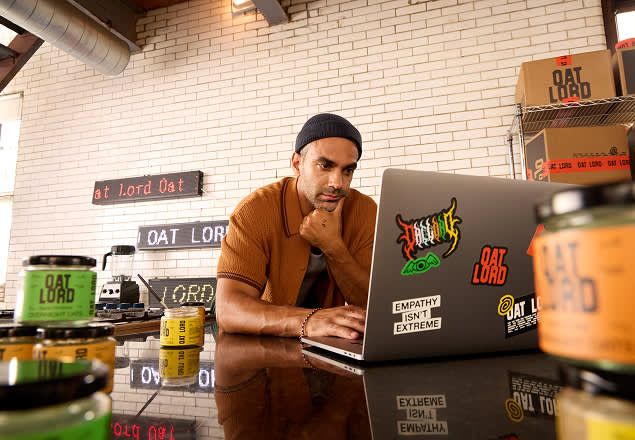
Mailchimp customers saw up to a 24% higher click rate when they segmented their campaigns than when they didn’t.*
How to segment my email list for higher conversions
The secret to higher conversions isn't sending more emails — it's sending more relevant emails. Advanced customer segmentation shifts your focus from who your contacts are to what they actually do. Here's how to apply this email segmentation strategy:
-
Target by purchase behavior:
Create advanced customer segments based on total lifetime value, specific product categories purchased, or how long it's been since someone last ordered.
-
Leverage engagement levels:
Some of the highest-converting segments target contacts who clicked an email in the last 30 days but haven't purchased yet. These warm leads just need the right nudge.
-
Predictive likelihood to purchase:
AI-driven segments identify customers most likely to buy again based on past patterns, so you reach them before they start shopping elsewhere. Marketers saw 266% more revenue on average from connected stores when they used predicted segments.*
Strategic benefits of advanced customer segmentation
Advanced segmentation drives higher revenue, stronger retention, and better deliverability across every send. Smaller, more targeted sends consistently outperform broad blasts across every metric. Here's why advanced customer segmentation works:
-

Increased email deliverability:
Sending relevant content to engaged groups lowers bounce rates and reduces the likelihood of being flagged as spam. Mailchimp maintains an average email delivery rate above 99%.
-
Higher revenue per recipient:
Targeted messages feel personal, leading to higher click-through rates and more efficient conversion funnels than generic campaigns sent to your full list.
-
Improved customer retention:
Advanced segments help you identify lapsed VIPs before they churn, enabling automated win-back campaigns that reference their actual history with your brand
Bridging the gap between big data and actionable segments
The biggest barrier to advanced segmentation isn't the data — it's making that data accessible without requiring a data science background. Mailchimp's no-code tools make audience segmentation approachable for any marketer. Here’s what you get:
-
No-code segment builder:
Create complex if/then logic strings through a visual interface, with no SQL or developer assistance required.
-
Third-party data integration:
Pull in data from your e-commerce store, CRM, or custom apps to inform your segments with a full picture of each customer.
-
Automated lifecycle triggers:
Connect advanced segments directly to Marketing Automation Flows so the right message fires the moment a contact enters a segment.
Try our Standard plan for free!
Find out why customers see up to 24x ROI* using the Standard plan with a risk-free 14-day trial†. Cancel or downgrade to our Essentials or basic Free plans at any time.
Find out why customers see up to 24x ROI* using the Standard plan with a risk-free 14-day trial†. Cancel or downgrade to our Essentials or basic Free plans at any time.
Find out why customers see up to 27x ROI* using the Standard plan with a 14-day trial†. Cancel or downgrade to our Essentials or basic Free plans at any time.
Find out why customers see up to 27x ROI* using the Standard plan with a 14-day trial†. Cancel or downgrade to our Essentials or basic Free plans at any time.
Get 15% off our Standard plan
Businesses with 10,000+ contacts can save 15% on their first 12 months.† Keep your discount if you change to Premium or Essentials. Cancel or downgrade to our basic Free plan at any time.
Businesses with 10,000+ contacts can save 15% on their first 12 months.† Keep your discount if you change to Premium or Essentials. Cancel or downgrade to our basic Free plan at any time.
Businesses with 10,000+ contacts can save 15% on their first 12 months.† Keep your discount if you change to Premium or Essentials. Cancel or downgrade to our basic Free plan at any time.
Businesses with 10,000+ contacts can save 15% on their first 12 months.† Keep your discount if you change to Premium or Essentials. Cancel or downgrade to our basic Free plan at any time.
-
Generative AI features
-
Actionable insights into audience growth and conversion funnels
-
Enhanced automations
-
Custom-coded email templates
-
Customizable Popup forms
-
Personalized onboarding
Standard
Send up to 6,000 emails each month.Send up to 100 emails risk-free—no credit card required. Save a payment method to unlock 5,900 sends for the rest of your free trial.
Free for 14 days
Then, starts at 0 per month†
per month for 12 months
Then, starts at per month†
†See Free Trial Terms. Overages apply if contact or email send limit is exceeded. Learn More
†See Free Trial Terms. Overages apply if contact or email send limit is exceeded. Learn More
†See Free Trial Terms. Overages apply if contact or email send limit is exceeded. Learn More
Save 15% on the ultimate expert-assisted platform for growth
Engage your audience and increase sales with 15% off your first 12 months†. Plus, get expert support to help migrate your data and provide strategic guidance—exclusive to the Premium plan.
- Phone & Priority Support
- Popup Forms
- Multivariate and A/B Testing
- Enhanced marketing automation flows
- Dedicated Personalized Onboarding
- Predictive Segmentation
Larger contact list? Call +1 (800) 330-4838 for custom pricing, annual plans, demos, and more. Contact sales.
Premium
Send up to 150,000 emails each month.
Save 15% on 10,000+ contacts
per month for 12 months
Then, starts at per month†
†See Offer Terms. Overages apply if contact or email send limit is exceeded. Learn More
Larger contact list? Call +1 (800) 330-4838 for custom pricing, annual plans, demos, and more. Contact sales.
FAQs
-
The difference between basic and advanced segmentation is the depth and complexity of logic you can apply. Basic segmentation uses single-layer filters with limited conditions. It’s useful for straightforward splits like location or subscription date.
Advanced segmentation uses nested logic, unlimited conditions, and deeper behavioral triggers. It can also incorporate psychographic segmentation, grouping customers by values, lifestyle, and motivations rather than just observable data.
A basic segment might be "customers in Texas." An advanced segment might be "customers in Texas who bought running shoes in the last 60 days and opened at least two emails but haven't purchased since."
See this beginner's guide to segmentation for a broader overview.
-
Advanced segments allow for a 1:1 feel even when sending to thousands. When someone receives a message that reflects their actual purchase history and behavior, they're more likely to click and convert.
Running a customer segmentation analysis helps you identify which groups generate the highest lifetime value so you can allocate budget accordingly.
From there, needs-based segmentation takes it further by organizing those groups around what they actually need from your brand (rather than just who they are) so that your messaging addresses real motivations instead of assumptions, and fewer sends go to uninterested contacts.
-
Yes. Your audience data isn't limited to email. Sync advanced segments with social platforms to build lookalike audiences based on your most valuable customers, or retarget active email subscribers with ads that reinforce what they've already shown interest in.
For SMS, apply the same behavioral logic you use for email to identify contacts who engage better on mobile and route time-sensitive messages their way. The more channels that draw from the same segmentation data, the more consistent and effective your overall marketing will be.
Millions of users trust us with their marketing. You can too.
*Disclaimers
- 24% Higher Click Rate: The 24% higher click rate is based on internal Mailchimp data and is not guaranteed for all users. Individual results may vary based on a variety of factors, including campaign content, audience engagement, and segmentation strategy.
- (A) 266% More Revenue: 266% more revenue on average for Standard and Premium users' connected stores using predictive segmented emails versus non-predictive segmented emails for Jan 2023 - Dec 2024 period. Predictive Segments available on Standard or Premium plans only.