Mailchimp’s AI helps Stash Hotel Rewards see what works

Mailchimp’s Analytics AI feature saved Stash from building its own agent.

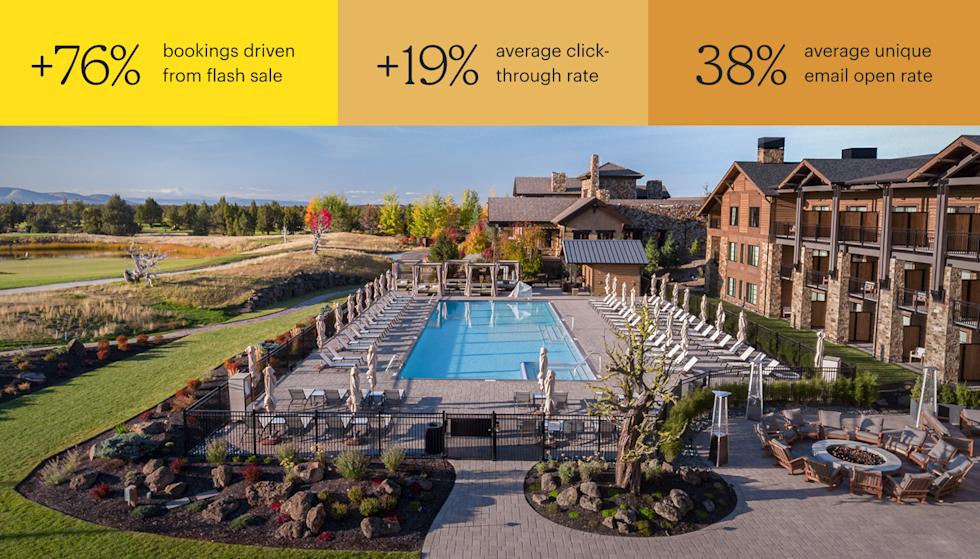
Aerial view of a large outdoor swimming pool surrounded by lounge chairs, landscaped gardens, and lodge-style buildings. A golf course and open natural landscape extend into the distance beneath a clear blue sky. Stats above image are: +76% bookings driven from 5-day flash sale, +19% average click-through rate, and 38% average unique email open rate.
Published: August 2026 – Travel – California, US – 729K subscribers
A great independent hotel doesn't feel like a chain. There's a story behind the front desk, a little more care in the details, and a sense of place you won't find in a building designed to look the same in every city. The hard part is finding those hotels—and, if you run one, getting found.

Stash Hotel Rewards is built for that. The business runs a points-based loyalty program that connects travelers with over 350 independent hotels across North America and the Caribbean. Stash Hotel Rewards members earn points on every stay and redeem them for free nights with no blackout dates and no expiration. It's free to join and, as the team likes to say, anything but cookie-cutter.

The Stash network has 2 audiences: a large base of members and hundreds of independent partner hotels. Stash's job is to introduce the two. For many of those hotels, an email from Stash is the best way to get noticed across such a large membership. "We're all about independent hotels," says Emily Merklen, Marketing Associate at Stash. "It's all about those little touches and parts of hospitality that you don’t typically get at bigger chain hotels."

Stash uses Intuit Mailchimp to power the email program that holds that network together, reaching travelers and hoteliers through a single platform. It also modernizes how Stash designs, tests, and targets each send.

The challenge: Earning attention across 2 unique audiences

The small marketing team at Stash has to justify every email it sends without asking too much of its audience. Both of its primary segments, travelers and especially hoteliers, can be difficult to reach.

A vacation isn't usually an impulse buy, so members aren't waiting around to book. Hoteliers are tougher still because they're busy running their properties and already hear from plenty of vendors. Reaching both groups effectively is the balance Stash has to strike.

“They're hoteliers, they've got a full inbox,” Emily says. “We're one of a lot of different vendors that they communicate with—and even guests they're communicating with.”

“We were going to try to build our own AI agent for analytics, and we don't need to because Mailchimp has it literally in the system.”

- Emily Merklen, Marketing Associate, Stash Hotel Rewards

The tools: A/B testing, segmentation, and analytics

Stash syncs 4 kinds of accounts through the Mailchimp API—partner hoteliers, meeting planners, members, and the front-desk agents at partner hotels who enroll new travelers—each with its own details and email preferences.

Once in the system, members self-select into segments for their monthly points statement, deals, or new-hotel announcements, and Stash adds location targeting when a promotion is regional. The payoff is less guesswork and fewer blanket email blasts that get deleted.

Stash runs A/B tests on subject lines and has learned that the version promising a clear deal, bonus points, or urgency tends to win. The testing does double duty. It lifts open rates and confirms the team can keep showing up in inboxes, because the data shows people are opening.

And once an email is open, the design has to hold up, especially on mobile, where most members read. Stash rebuilt its recurring sends in Mailchimp's email builder and templates with mobile in mind, and uses the Canva integration to drop in polished imagery, including animated GIF heroes.

All of it came together in an April flash sale where partner hotels opted in to be featured. Stash emailed out the campaign in waves rather than all at once. They first sent it to members who hadn't opened recently to see if the sale would change their habits, then followed up with the most engaged readers from recent campaigns. They used Timewarp to land each send when a reader is most likely to check. Mailchimp's reporting made that targeting possible by showing who was opening and clicking in real time.

Reading the numbers that closely led Stash to lean on Mailchimp’s AI insights and recommendations to identify what to improve. The tool flagged small, specific changes the team hadn't focused on, such as turning a plain text link into a clear "view statement" button—giving them a running list of tweaks to test.

“We were going to try to build our own AI agent for analytics, and we don't need to because Mailchimp has it literally in the system,” Emily says.

  • +76%

    bookings driven from 5-day flash sale

  • +19%

    average click-through rate

  • 38%

    average unique email open rate

The results: A flash sale that lifted featured-hotel bookings 76%

Across their email program, Stash has moved the numbers that matter with average unique open rates around 38% and click-through up 19% year over year, all while keeping a deliberately light cadence in send frequency. The clearest proof of what that engagement is worth came in a single campaign.

Over 5 days in April, 24 partner hotels opted in to be featured in a member-facing flash sale and bookings at those hotels rose roughly 76% compared with 2 similar 5-day stretches. Their share of all bookings climbed, too, from about 19% to 24%.

Two changes drove it. The first was getting the right people to open. Stash targeted members based on their recent activity and used Timewarp to deliver each email when recipients were most likely to check it. These tactics pushed the flash sale’s open rate well above the program average. The same approach lifted a network-wide promotion in February.

The second change was earning the click once the email was open. Stash rebuilt its Exclusive Feature emails in Mailchimp’s mobile-friendly email builder. These member-facing campaigns, which partner hotels can sign up for, saw higher click rates. Subject-line testing helped increase open rates even further.

Those Exclusive Feature campaigns run as A/B tests, so Stash measures them through Mailchimp's AI reporting—the same AI that suggests what to improve also shows the team what's working.

What's working now is also a starting point. Stash is building a welcome automation flow for new members and plans to lean further into personalization as more booking and preference data flows into Mailchimp. The AI recommendations add to the team's list of things to test, and a dedicated Customer Success Manager keeps surfacing tools they might not have tried on their own.

“The innovations, best practices, and support from Mailchimp are invaluable,” Emily says. “If we're using a tool and maybe aren't using it in the best way, we always know we're going to learn something.”

For a small marketing team introducing a large membership to hundreds of independent hotels, every email is another chance to help a traveler find a destination worth remembering.

Drive growth with AI analytics

Share This Article