


Email has been a staple in digital marketing for so long, some of us may have missed the meteoric rise of SMS marketing. According to our 2026 report, The Art of the Opt-In, SMS is nearly on par with email in every way:
- 88% of marketers are dedicating moderate to significant investment in both email and SMS.
- 81% of SMS lists and 85% of email lists have grown in the past 12 months.
- 79% of marketers rate their SMS lists as high or very high quality (78% rate their email lists similarly).
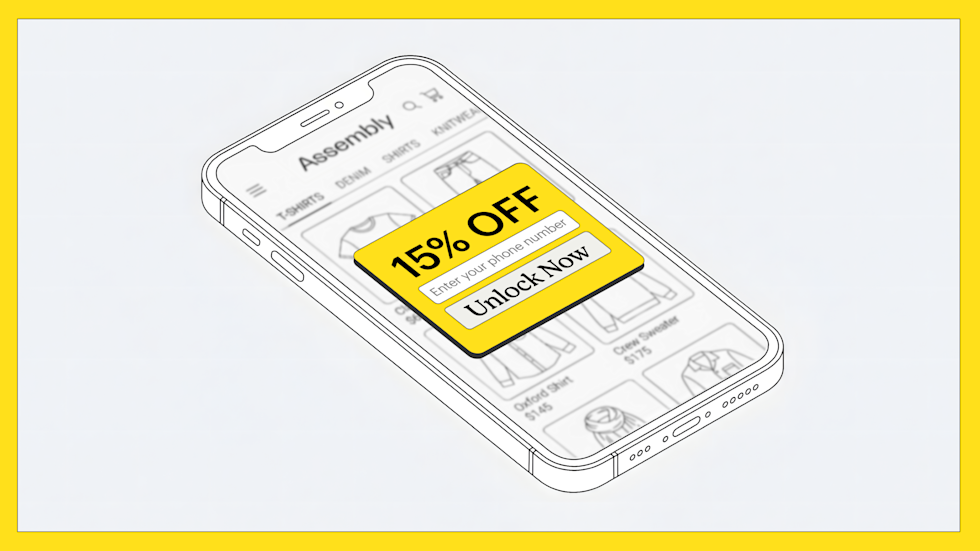
SMS popup forms—capturing mobile phone numbers via website popup forms for SMS marketing [1]—are one of the best ways to capitalize on this opportunity. In fact, popups or overlays are employed more by top-performing brands (those with average conversion rates greater than 20%) than lower-performing brands (35% versus 27%).
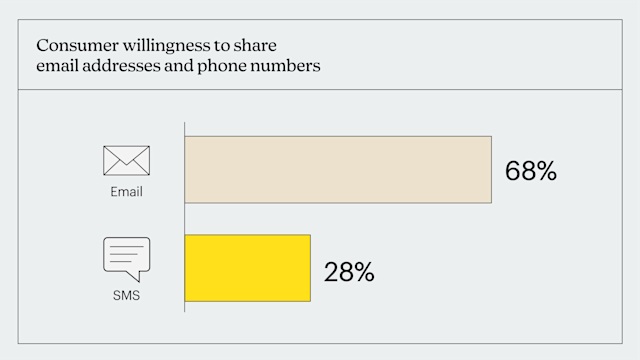
That said, SMS capture isn’t as simple as recycling the same tactics that worked for email. While 68% of consumers are willing to share their email addresses, only 28% are willing to share their phone numbers. So to improve mobile opt-ins, you need to build a distinct SMS popup strategy.
Start with data
The best SMS campaigns enhance your digital marketing efforts rather than merely copying your email program. That’s because their strategies are built with the kind of data you want to capture in mind.
In our report, The Art of the Opt-In, we found that the highest-performing brands are more likely to ask for personal details than their lower-performing peers. Similarly, those with the most significant SMS list growth are more likely to leverage capabilities like targeting based on behavior and personalization by source or attributes.
Thus, an effective SMS popup strategy begins with laying out how you want to communicate with customers over SMS. Then, you can design popups that capture everything you’ll need to do so.
The right marketing platform should act as a connected system and make growing your audience easier. For example, a common best practice is to capture the email first and then offer an SMS opt-in with a discount or other incentive. Intuit Mailchimp’s popup builder is set up this way by default.
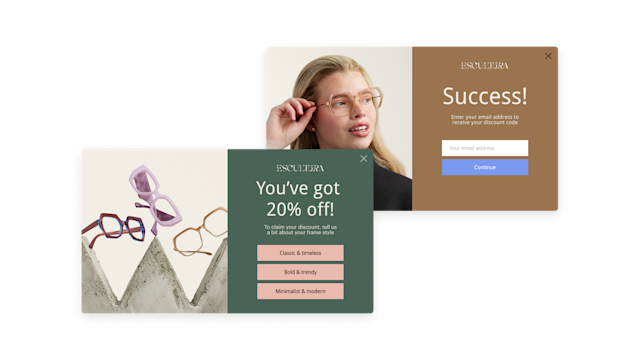
Another best practice Mailchimp supports is mini quiz popups. Imagine an eyeglasses brand asking about your frame style. It’s a low-friction way to capture your interest that they can use to better target you with relevant messages.
Of course, acquiring new contacts is a nonstarter if your audience doesn’t trust you. Our study also found that typically, 64% of consumers don’t mind or even prefer double opt-ins, saying they feel more secure. That’s why Mailchimp offers Instant Opt-In. Users can verify their phone number directly within the popup without leaving the site to reply Y. They enter their number, then enter the verification code they receive.
Plan for automation
Every brand wants their marketing automation to be robust and comprehensive, but that’s why you have to start with data. When we surveyed more than 2,000 marketers, we found that brands with high-quality lists are 3 times more likely to have fully automated marketing programs (The Art of the Opt-In).
In other words, growing your audience through mechanisms like popups is foundational to automation and your SMS marketing efforts overall. And staggering what you collect and when can not only increase opt-ins, it can increase the kinds of information you capture. More information can help you create more granular segmentations and automation flows that connect your marketing to real business outcomes.
With so much opportunity on the line, you need a marketing platform that operates as a multichannel interface. According to our report, brands with the most significant SMS list growth are more likely to have tech that supports multichannel opt-in (44% versus 37%).
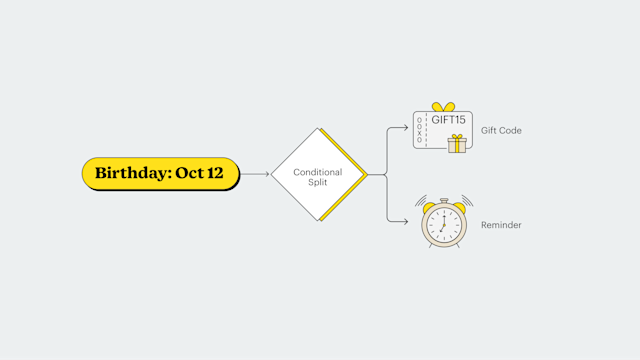
Your competitors clearly don’t see SMS as an optional marketing channel, and neither should your marketing platform. The best tools should make incorporating SMS into flows as seamless as adding another email. Mailchimp offers SMS natively for this reason. Automations like welcome series and abandonment sequences perform best as multichannel flows, where you can easily add filters and conditional splits based on customer preferences.
Design for consistency
Even with a single platform solution, keeping multichannel campaigns consistent in a multi-device landscape isn’t a given. Based on our survey of more than 6,000 consumers, 28% trust brands more when they use professional branding and design consistency. But if your SMS popups look nothing like the rest of your website, you could be hemorrhaging valuable new leads without knowing it.
At Mailchimp, we believe design consistency should be our job, not yours. Your job is developing creative, successful campaigns that deliver value to your customers and your brand. We’re here to make that easier for you. Here are a few ways our popup editor can do that.
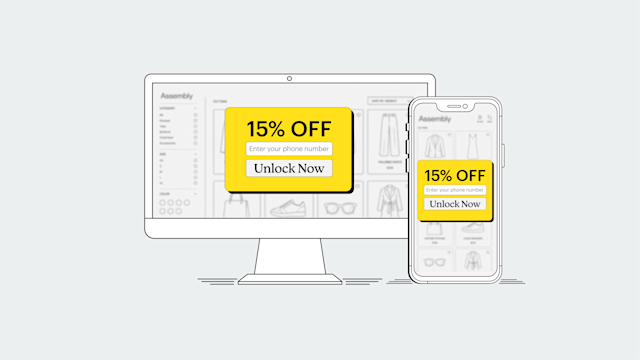
- Design it once: You shouldn’t have to design the same popup twice. Mailchimp’s popup editor lets you design a single popup that can capture emails, phone numbers, or both, and render responsively on both desktop and mobile. Our popup forms also offer more than 100 customizable templates that you can stylize for a fully branded design.
- Enhance it once: Brand consistency shouldn’t be restricted to related web fonts or fallback font families. If you have a custom brand font, you don’t even have to upload it to Mailchimp. Our platform can just pull it directly from your website. We also offer animation options to help make your popups really pop and background opacity settings.
- Review it once: Remember when you had to deploy your designs before you could see how they looked on your site? If you’re still doing that for popups, you shouldn’t have to. Features like on-canvas and live site previewing are table stakes in Mailchimp because we know how important brand compliance and accessibility are to you.