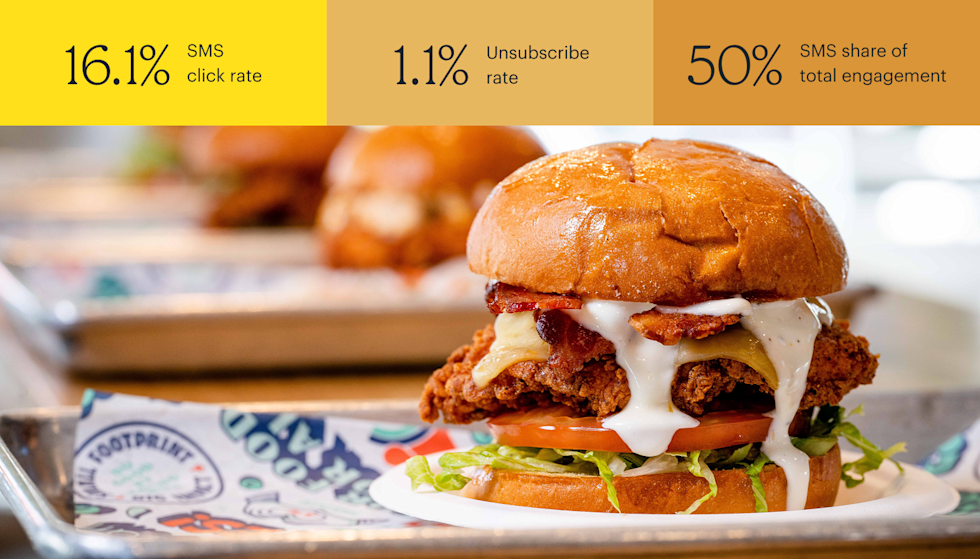
Birdcall serves chicken sandwiches 7 days a week—even on Sundays.
It's a small detail, but it signals something important about the Denver-based restaurant chain: It’s built for customers who want things their way, on their schedule. Order from a kiosk, customize every topping of all-natural ingredients, pick up your sandwich from a numbered bay when the screen calls your name.
No conversation required if you don't want one.
"It's an introvert's dream," says Kayla Lindberg, Director of Marketing & Communications at Birdcall.
That same customer-first mindset extends to how Birdcall communicates with 163,000 subscribers across 3 states. The company has turned promotional days like National Fried Chicken Day into cult classics by offering exclusive bargains to people who've opted into their messages. You want to know about dollar chicken sandwiches on July 6? Subscribe. Otherwise, you'll find out later and catch the next one.
But social media algorithms bury time-sensitive lunch specials for days. Email inboxes overflow with out-of-office replies during holiday promotions. Radio ads reach people 45 minutes away from their destinations, when stopping for food isn't convenient. Birdcall needed a way to cut through the noise.
As one of the first brands to adopt Intuit Mailchimp's dedicated short code SMS, Birdcall discovered a channel that reaches customers when and where it matters.
The challenge: Algorithms and out-of-office replies
Birdcall's time-sensitive offers were expiring before customers ever saw them.
The company relied heavily on social media to promote lunch specials and dinner rush deals, but platforms like Instagram aren’t built for real-time marketing.
"The algorithm is changing by the minute, so what could work on a native feed might not hit your personal feed for another 2-3 days, so the offer could expire by then," Kayla says.
The company tried radio ads to reach commuters, and the ads generated traffic to landing pages that proved people were listening. But they weren't converting.
Email faced its own challenges. Holiday promotions, which should have been high-traffic periods, generated floods of out-of-office replies instead of customers.
Even brand loyalists using the app tended to opt-out of push notifications.
But when customers order a chicken sandwich at a Birdcall kiosk, they enter the phone number to receive an automated SMS letting them know their meal is ready. These messages had minimal opt-outs. The company saw the potential for reaching customers via text but needed a way to send marketing messages, not just transactional updates.
Managing 163,000 subscribers across Colorado, Arizona, and Texas presented targeting challenges, too. When winter storms hit Texas and Colorado but left Arizona untouched, blanket messaging wouldn’t feel personal. "Telling people in Arizona winter is coming doesn't make any sense. They're having 60-degree weather, they're wearing shorts," Kayla says.
Kayla brought experience from managing communications for 48,000 university students who received 50 emails per day from the institution alone. She knew that frequency mattered, but so does channel selection. "If my inbox is getting flooded with 15 emails about chicken tenders from all these other vendors, how do we break through that a little bit?" Kayla asks.
The answer required a channel where Birdcall's messages would actually get seen and opened when timing mattered most.