


We’ve identified six opportunities for marketers to grow revenue during the summer months. Much of this is based on our landmark report, “The New Ecommerce Calendar,” that revealed opportunities to connect with your consumers all year long, based in part on surveys with more than 9,000 shoppers.
We shared some of these insights on a recent webinar, “The New Summer Playbook,” featuring CommerceNext Co-Founder Scott Silverman, Canvas8 Associate Director of Insights Adriana Bolton, and Mailchimp Senior Manager of Content Marketing Strategy Jillian Ryan. You can watch the replay here.
The biggest single sales moment of summer is Amazon Prime Day. In our research, a whopping 64% of US shoppers had shopped during Prime Day, making it one of the juggernauts of the sales calendar. Walmart and Target couldn't let Amazon own that space. They've carved out their own summer territory to catch that share of wallet; 36% of US shoppers purchased specifically during Walmart Deals Week.
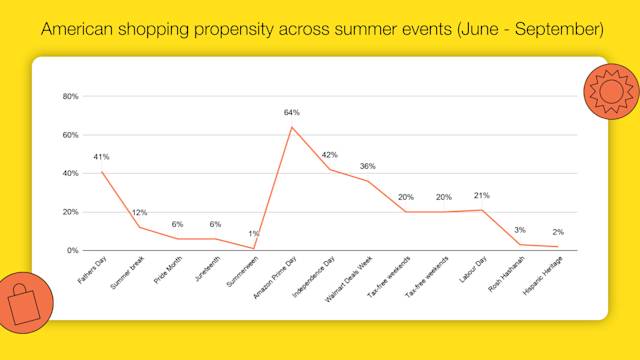
The summer sales season is way bigger than that though. Here are the six opportunities we’ve identified, and a playbook for what you can do to increase revenue and scale your sales before the Q4 rush.
Opportunity 1: Offer Summer Utility
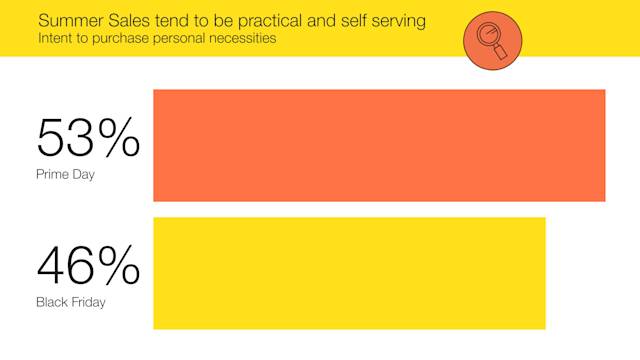
The first opportunity involves meeting consumers' need for utility during the summer. On Black Friday and Cyber Monday, consumers are more likely to hunt for deals for other people. Summer sales, however, tend to be more practical and self-serving. During this summer, it’s less about inspiration and more about convenience.
Mobile messaging is key; SMS is a high-urgency channel. Provide shipping updates, ‘1-hour-left’ reminders, or exclusive mobile-only codes that bypass the noise. Lean on data and segmentation to help craft email and SMS campaigns that deliver ease and utility to customers. Instead of sending an email that links to a category page of 50 items, send a pre-made shopping list based on their past behavior.
You can also tap into customers’ behavioral data. Mailchimp Pixel, for example, captures every product view, add-to-cart, and checkout start from your Shopify, WooCommerce, or Wix store and connects that data directly with your Mailchimp audience. Instead of only knowing someone made a purchase, you know they've viewed the same product three times without adding it to their cart. Say a shopper finds what they want during a sale, but it's out of stock. When the item comes back, you can automatically send them an email or SMS, turning a missed sale into a recovered one.
Opportunity 2: Help Shoppers Achieve Summer Goals
Summer can act as a mental reset or a temporal landmark. People decide, 'This is the summer I become a runner' or 'the summer I master the BBQ.' The tactical pivot here is moving from selling products to selling outcomes. Don't just show a category page; show a bundle that helps them reach that goal.
There's opportunity for temptation: 82% of US shoppers have a general idea of what they want to buy during sales events, but remain open to other deals, and 56% say they do not set a strict budget.
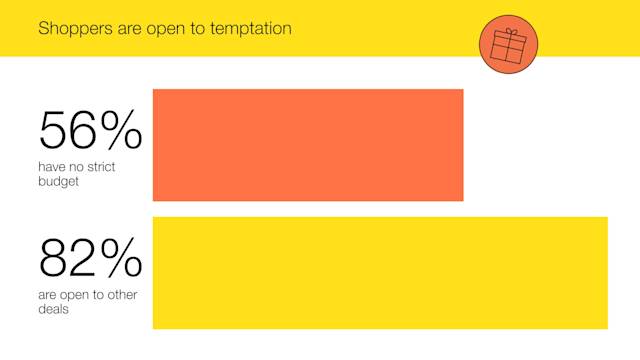
The revenue opportunity is in that cross-channel nudge. If a customer clicks an email for a primary item like a tent, you could use an SMS trigger 30 minutes later to offer a 'camping accessories starter kit' at a small discount.
You can also use your messaging to make that 'new me' feel attainable. Instead of a generic ad, send an email featuring real people achieving those summer goals using your products. And instead of a generic 'sale ends tomorrow' banner, use personalized countdowns or 'limited stock in your size' alerts in your SMS flows. It feels like a helpful tip, not a high-pressure tactic.
Having robust analytics, like Mailchimp’s Analytics AI, lets you understand why certain tactics worked or not. You can also use such tools by connecting them in ChatGPT or Claude. Work where and how you want so you can reach customers where they are.
Opportunity 3: Make Summer Shoppers Feel Special
More than one-third (34%) of US shoppers say they feel overwhelmed by the volume of deals being thrown at them. On top of that, 76% of shoppers feel like these events are a high-pressure tactic to make them buy things they don't need. To win share of wallet away from big brands like Amazon and Target, you can do something different by moving away from blasting sales messages and lean into rewarding your loyal customers.
In the US, 32% of shoppers have been influenced by loyalty rewards. An effective move with email and SMS is the silent launch. Instead of a noisy announcement to your entire list, share your best deals via a hidden URL specifically for your most valued customers. This builds insider status.
You can also use a 'tiered reward' email system. Send your 20%-off code only to your top 5% of customers, clarifying what makes them so valued, and then send a 'last chance' email to the broader email list with a lower discount. SMS can serve as an early-access beacon, making customers feel like they’re part of an exclusive club.
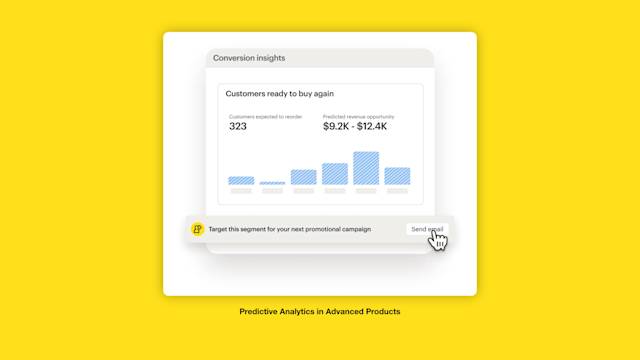
You can use AI predictive insights to identify your 'ready buyers', those high-value customers most likely to convert. This will give you the specific data points you need to explain to each customer segment why they are VIPs. To combat distrust in marketing, prove to customers that they are actually special.
Opportunity 4: Create a Sense of Pride and Belonging
Summer is packed with identity-based moments – Pride, Juneteenth, Hispanic Heritage Month –
and each one offers brands the opportunity to tap into self-gifting moments. Urban shoppers are 39% more likely to make purchases for cultural and cause-driven events.
The key is tapping into the moments that your brand can represent authentically. The risk of backfiring usually happens when a brand's support feels performative or disconnected from their values. To mitigate that, lean into your brand DNA.
Build storytelling into your email and SMS marketing. Send a story-driven email featuring either a partner, or internal advocate, or include a 'give back' revenue stream where a percentage of proceeds from sales goes to a relevant cause. Instead of just putting a rainbow on a product, partner with a creator or a local organization to tell a story that's bigger than your brand. There is also an opportunity for advocacy from within, as your best 'influencers' may be in-house. Give them space to tell their stories. When you lead with the 'why' and elevate real voices, it feels like a contribution to the culture rather than an opportunistic cash-grab.
Opportunity 5: Bring Shoppers into Cultural Conversations
Summer brings huge entertainment and cultural moments. As a result, people engage in 'trend-hunting' – buying specific items just to feel 'in' on the viral momentum.
This summer, that 'entertainment' bucket has a massive new addition: The World Cup. It's the biggest sporting event on the planet, and with 16 host cities across North America, it's going to dominate mindshare for the entire month of July, which may be why Amazon is shifting their Prime Day to June for the first time this year.
To win here, you need real-time relevance. Plan your 'proactive' triggers now, but you also need the agility to react to the internet's pulse. With the World Cup, we already know the cities, dates, and teams playing, so you can start building your playbook now. If you're a brand based in a host city, or you source products from a country that's competing, you can plan specific triggers ahead of time, like an automated promo that fires every time your team scores a goal.
But to move that fast, you need a direct, high-speed line to your customers, which is where email and SMS come into play. With conversational commerce, you treat your audience like a friend in a group chat. If a specific 'game day' aesthetic or a viral festival outfit starts trending, you shouldn't be the last mover. If you can react in real-time or within hours, such as with a 'Watch Party Essentials' list or a 'Festival Survival Kit', you become part of the conversation.
SMS capabilities are designed for those immediate moments. You can grow your list across more touchpoints and use instant opt-in forms to capture that game-day or festival energy while it's peaking.
Opportunity 6: Gift and Ye Shall Receive
Over the last two years, we've seen significant retail activity anchored to gifting moments over summer: 42% of American shoppers made purchases for Independence Day, 41% for Father's Day, and 21% for Labor Day.
This year, that is going to be supercharged because we are heading into the 250th Anniversary of the Declaration of Independence. We expect to see a spike in spending as people invest in celebrations, travel, and community events.
Shoppers often buy gifts for themselves while shopping for others. It's that classic 'one for you, one for me' mentality. We already see this over Father's Day. As people shop for Dad in categories like automotive and sporting goods, self-gifting numbers in those exact same categories rise simultaneously.
Consider launching a bundled belonging strategy. Create 'Wanna Match?' offers or double-up bundles. For instance, if you're a coffee brand, offer a subscription for Dad and a second one for the buyer at a togetherness discount.
Next, use urgency-based utility. Caught between summer holidays, entertaining the kids and getting out to enjoy the sun, people often find themselves in a last minute panic when it comes to these gifting moments. You can solve this by sending real-time, practical nudges via SMS.
Finally, lean into whimsical upselling. If someone is buying 4th of July party supplies, prompt them with a host's reward self-gift. It acknowledges their effort in organizing the moment and rewards them for it, making the self-gifting feel earned.
Even for sectors beyond retail, there’s the opportunity this summer to sell the experience of connection. For a non-profit, a moment like Father's Day or Independence Day is a chance to tap into that desire for connection and community. In entertainment and hospitality, you're often providing the third space where these traditions actually happen. Whether it's a Labor Day brunch or a family staycation, you're the stage for the memory.
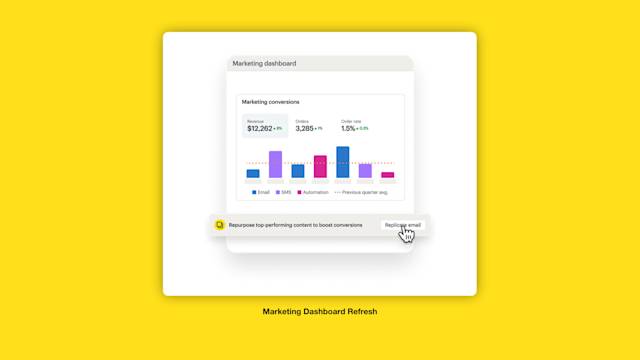
You can invest in these mission-driven campaigns by using side-by-side reports that show performance across email, SMS, and automations. This shows you which stories are sparking that feeling of joy, so you can scale your impact by doubling down on the channels that are driving connections.
The Golden Rule of Summer Sales
As Scott Silverman said in the webinar, his Golden Rule is “to let your data dictate your entry point.” He added, “Winning means using your insights to give shoppers exactly what they need, whether that's an 'easy button' for necessities or a sense of belonging through advocacy.”
You don't have to do it all. Pick the two or three anchors that align with your business goals, use your email and SMS channels to deliver that personalized relevance, and you'll capture that share of wallet that the big-box retailers often miss.
That’s how you can work smarter this summer, and maybe earn a little time off. We’d say not to check your phone or email, but you might miss your favorite summer deals and shopping events.